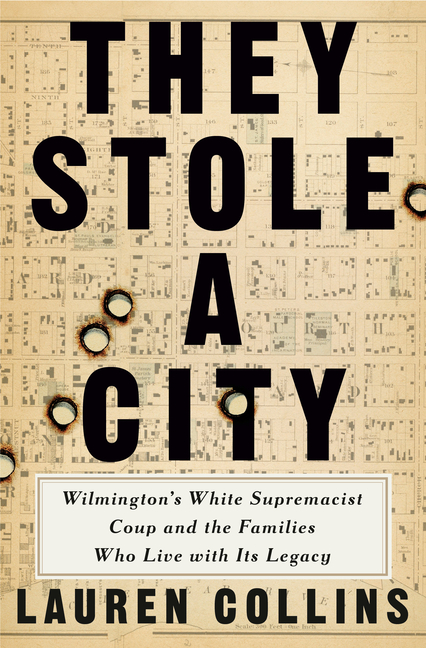
Lauren Collins weaves together stories of four Wilmington, North Carolina, families over 125 years to create a full accounting of the long-term effects of the 1898 white supremacist massacre and coup and its critical role in subverting American democracy.
A powerful new book ... Collins is a longtime staff writer for The New Yorker who is known for pieces that are often witty and delightful ... Needless to say, They Stole a City is a categorically different kind of book ... I happened to be reading They Stole a City over the July 4 weekend, toggling between Collins’s historical descriptions of a white supremacist paramilitary marching through Wilmington and contemporary news reports of a white supremacist group marching through Washington, D.C. The effect was sobering.
In this brilliant synthesis of scholarly research, archival discovery, and oral history, Collins joins a new generation of historians working in the wake of George Floyd’s murder to interrogate incidents of racial violence (often state-sanctioned) that troubles our past and draw a through line to the present, sounding clarion warnings.
Remarkably successful in its scope and depth, They Stole a City is an urgent argument for reckoning with history in order to understand the present backlash and rising white nationalism.