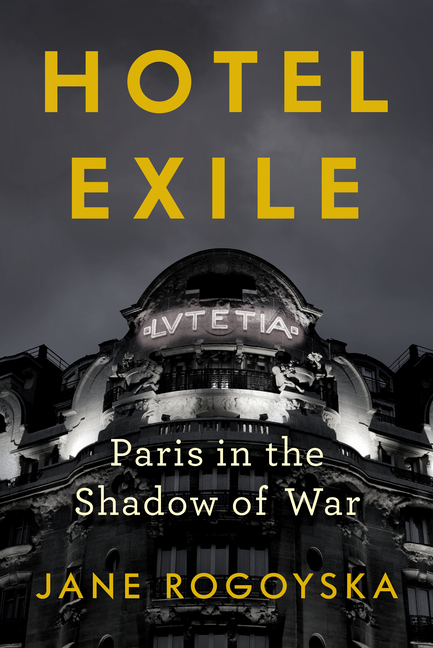
Since its opening in 1910, the Hotel Lutetia has been a grand Paris institution, a meeting place for artists, intellectuals, musicians, and politicians. In Hotel Exile, Jane Rogoyska writes about what happens at the edges of a war, passing through the doors of a normally functioning hotel, a site under occupation, and, finally, a shelter and place of healing.
The outlines of this story are familiar, but Ms. Rogoyska sees it anew through the Hotel Lutetia ... Relates the extraordinary transformation of the hotel into a center for those returning from concentration camps ... There is a great sadness in this book and also the occasional miraculous story of couples finding each other or of parents discovering a child who survived.
In this outstanding book, which has been shortlisted for the Women’s prize for nonfiction, Jane Rogoyska reports that by the mid-1930s the Lutetia had become headquarters to German political dissidents fleeing Hitler ... In the third and final part, Rogoyska’s book soars to great heights.
Jane Rogoyska’s eloquent history brings this period vividly to life, in part through the simple trick of narrating the story in the present tense ... Rogoyska includes some excellent pen portraits of characters on both sides of the war ... The real impact of this book arrives, inevitably, in its final section.