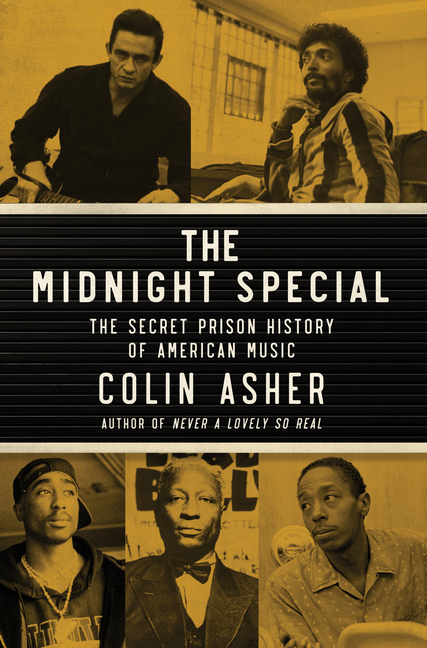
This historical account explores the rich tradition of music behind bars and shows how policing and prisons have shaped our musical culture from blues to hip-hop.
Asher’s book is a Midnight Special of its own. It’s a fog-piercing down-bound train of a book, better than it had to be ... If these profiles had been straightforward, that might’ve been enough. But Asher is a calm and sophisticated storyteller who picks you up and sets you back down in places you didn’t anticipate. Like a good film director, he knows how to stagger his material ... Taken together, the profiles in The Midnight Special amount to a multilayered indictment of America’s prison system, the largest in the world. None of these men were blameless, but the injustice on display will frequently make you sick to your stomach. The book also underlines sheer human resiliency.
A fresh new take on American music ... Mr. Asher explains how the New York Police Department during this time shaped the very sound of jazz, locking up numerous musicians ... These stories show how the aura of imprisonment enhances the public perception of an artist and his music.
Written with a touch of grace and a recognition of shared humanity. This chronicle is full of little epiphanies: for example, Lead Belly 'dreamt in song . . . and woke singing what he’d heard in his sleep,' and Don McLean’s 'Vincent' inspired Shakur to write music. A well-written and mesmerizing group portrait of five musical outlaws.