RaveTimes Literary Supplement (UK)Jane Rogoyska’s eloquent history brings this period vividly to life, in part through the simple trick of narrating the story in the present tense ... Rogoyska includes some excellent pen portraits of characters on both sides of the war ... The real impact of this book arrives, inevitably, in its final section.
RaveTimes Literary Supplement (UK)Air is as enigmatic as its title. The protagonists seek not so much salvation as a vanishing point, a way of disappearing into an alternative realm of meaning. Much remains unexplained, but clues and phrases recur ... Perhaps most importantly, the protagonist himself is brought alive ... Stylistically, too, the narrative moves from self-absorption to self- suppression, with the chapters set in the fantasy world incorporating significant amounts of dialogue and interaction. As the two strands intertwine and the survivors of the ice world return tentatively north, the painting of Merlin and Lancelot takes on new depths of meaning.
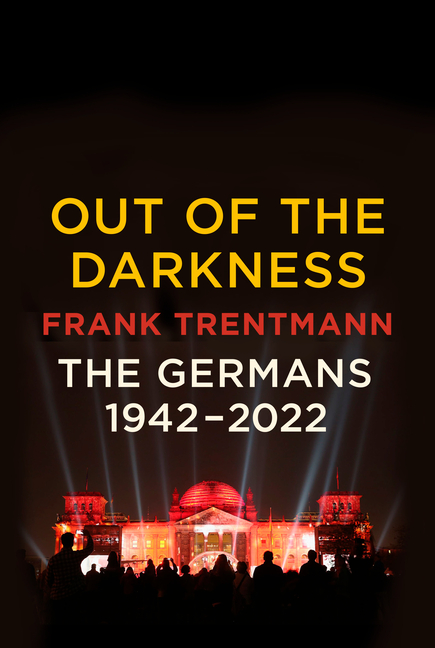
Frank Trentmann
RaveTimes Literary Supplement (UK)Ambitious ... Undertakes an explicitly moral reckoning with the past eighty years of Germany, from the war in Russia to the war in Ukraine ... Offer[s] insight into not just German history, but history more generally, understood as an aggregate of mutually enlightening methodologies ... rentmann’s study marshals an immense amount of evidence in response to a single basic question: how did Germans reassert their sense of themselves as morally oriented human beings.
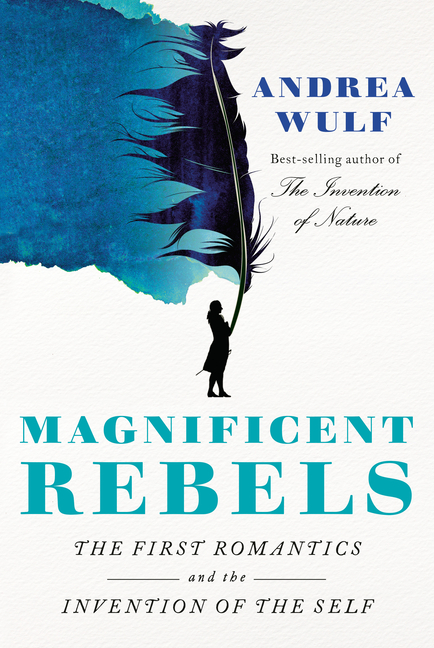
Andrea Wulf
RaveThe Times Literary Supplement (UK)... ambitious, engaging and effusive ... Wulf is excellent at this kind of descriptive prose, evoking the sights and sounds of the city with an almost classical enargia. We feel the excitement of living through the period alongside her vivid characters ... The tension between \'classical\' and \'romantic\' aesthetics, central though it was to the period, is underarticulated in Wulf’s telling ... Such intellectual absences are a function of her concentration on group biography. The work that the Jena Set produced – the reason we remember them, after all – sometimes comes across as an afterthought, a brief addendum to the main business of living together and falling out ... Wulf’s book reads as much like a novel as an intellectual biography. She is an expert at compressing her sources – letters, diaries, journals – into the kind of prose we recognize from nineteenth- century realism, complete with free indirect discourse ... This is fair enough – the sources are meticulously documented – but it raises the question of whether Wulf retains sufficient critical distance. Perhaps, in the end, her subjectivity is only too apt. Novalis suggested to Caroline Schlegel that they should turn their lives into a novel, and Andrea Wulf has taken up the challenge – not in the sense that Magnificent Rebels is made up, but in the sense that she imagines the lives of the Jena Set from the inside out. It is a considerable achievement.