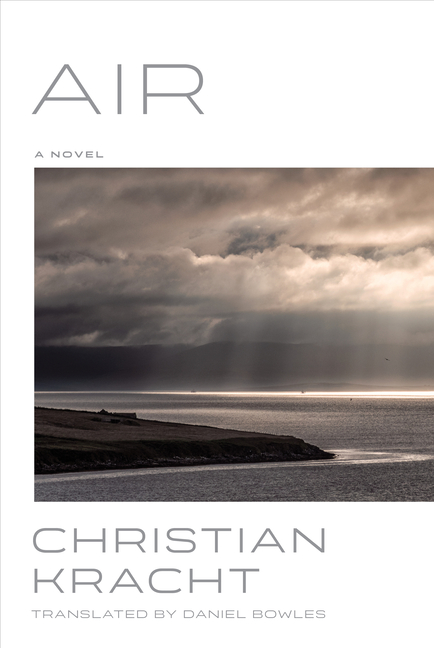
Paul, a Swiss interior designer living alone in the remote Orkney Islands, receives an unusual commission from Kuki, a prestigious design magazine: travel to a massive data center in Norway and coat its cavernous interior in the 'perfect white.' But after a solar storm disrupts the facility, Paul mysteriously vanishes into space and time.
Mr. Kracht’s bizarre book willfully stymies understanding. The author spins a stylish kind of strangeness, however. The writing, in Daniel Bowles’s translation from the German, is glass-like and pristine, colored by the characters’ changing moods the way a window is touched by light and shadow. Most of all, the high-fantasy storyline, which culminates in an exciting battle between the duke’s army and an icebound civilization that shelters Ildr and Paul, is good fun. Readers will leave Air none the wiser, but surprisingly content in their confusion.
Kracht has a sharp satirical eye ... It’s hard to know where Kracht’s satire is really aimed, partly because he delivers his fantasy saga in a register of total sincerity ... This book is weird, messy, tonally incoherent — and yet eerily, unaccountably compelling. For all its nicks and pockmarks, I like it very much.
One of the joys of Air, down to the breathy purity of its title, is its contempt for design—an easy target, but one for which Kracht has sharpened his blade ... There’s more to the novel, translated from the German by Daniel Bowles, than a purse-lipped satire of fetishism, but Kracht keeps it well below the surface. It involves something mournful about consciousness and memory—an antimaterialist belief, maybe sincere, that we exist beyond time and space, that another dimension flickers like Thomson’s film projector ... I guess this is how I feel about Kracht: that he doesn’t want to be understood, and that this is somehow charming.