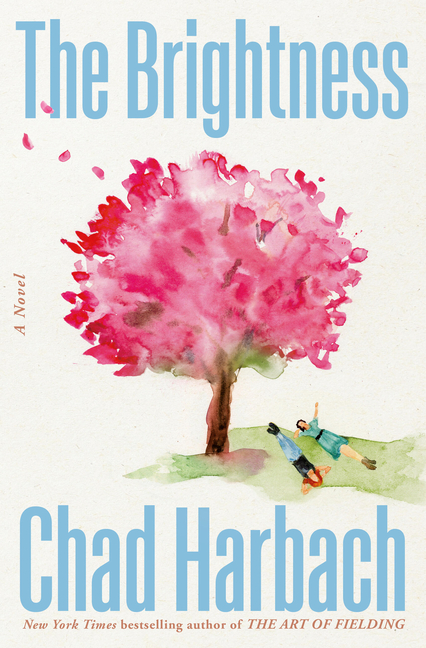
When Daphne Fuller and her husband Jonathan visit the Metropolitan Museum of Art, they notice an older, white-haired gentleman following them. The man turns out to be Eddie Triplett, her former stepfather, who had been married to her mother for a little more than year when Daphne was nine. Now fifty-three, Daphne hasn’t seen Eddie for many years, not since the fateful event that changed the direction of both their lives. Meeting again, time falls away; while their relationship was brief, it had a profound impact on them both, and now that they are reunited, they have no intention of ever being separated again.
A rare phenomenon in contemporary fiction: a novel both majestic and intimate, original and masterful in its structure, crystalline in its prose, revelatory in its insights, utterly devastating yet ultimately uplifting in its emotional impact. It is a radiantly intelligent and emotionally wrenching page-turner, the exquisite production of an author working at the height of her powers. I think it is her best novel yet ... It is a truly magnificent achievement.
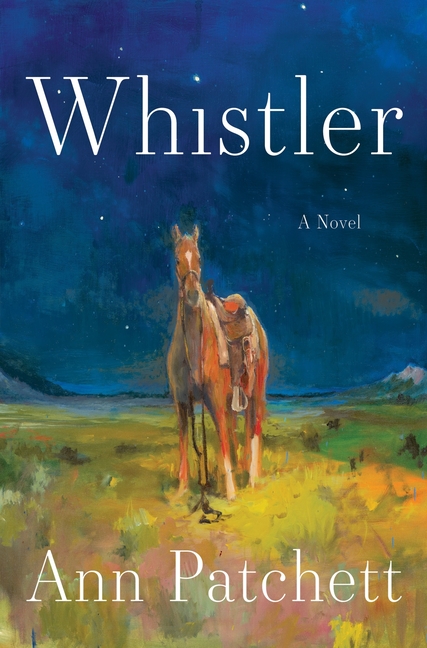
Ann Patchett’s new novel, Whistler, is that loveliest of summer gifts, a story of reconciliation, of old affections renewed, of a family’s circumference enlarged ... A writer of gentle wit and quiet grace ... May be her most essayistic and in that sense her most confident.
A spare, witty and incandescent story about family trauma and the mysteries of memory ... This exquisite writer has once again delivered an incandescent work of fiction — sweet, but never sentimental, infinitely wise and suffused with love ... Patchett’s literary style isn’t of the show-offy variety packed with dazzling sentences and edge-of-your-seat cliffhangers. The drama is quiet. Her words accrue and gain power through their spareness and clarity, and a level of character development that forges an easy intimacy with the reader ... I don’t recommend consuming Whistler in one enormous gulp. I dipped in and out, savoring scenes, reflecting on them, occasionally shedding a tear. In other words, I didn’t want it to end.