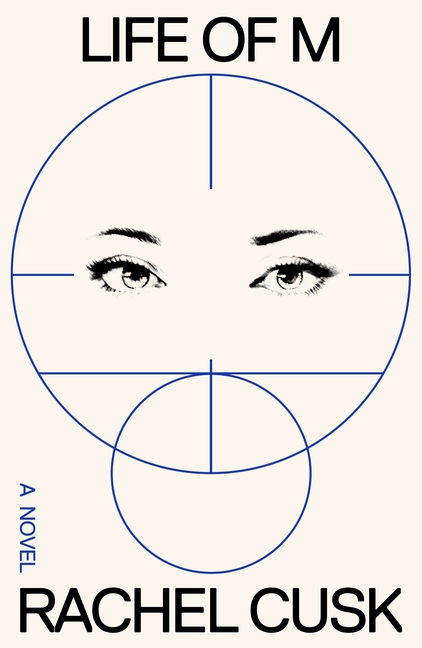
The movie star M is one of the most recognizable faces of our time. Her image is everywhere. It has been like that since she was a child. With such fame, her life has the appearance of freedom: people are instantly obliging, spaces are altered to accommodate her, time can be rearranged. M may live in the same places as real people. She may meet her friends or collect her children from school or walk her dogs as they do. But it seems the rules of reality have melted away. Now, a writer has decided to pay close attention to M’s life in the hope of understanding who she really is. It is hard not to feel ugly next to M, hard not to feel insignificant. But what truths—about the very experience of living—might this proximity allow the writer to briefly capture?
Cusk is one of the cleverest and foremost practitioners of autofiction, turning to the form after her memoirs of motherhood and divorce produced their own media discomforts. With the jet-setting heroine Faye of her landmark trilogy Outline, she might even be practicing aerofiction ... Life of M continues in that mode: rarefied, cosmopolitan, self-serious, a place where the Wi-Fi doesn’t work. The air up there where Cusk seems to be living and writing these days is gaspingly thin. She’s missed down here on Earth.
A lost little book— undisciplined, unfocused and instantly forgettable ... The true faults with the book turn out to be less ethical than technical ... Stripped of the scandal, the book has little life of its own. It will fade.
An unwieldy book with three disparate threads, each focussed on a different character ... Despite her reputation for rigor, Life of M is not a disciplined dismantling; it is discombobulated and haphazard, a machine breaking down at random ... At times, Life of M threatens to become a book composed entirely of vacuities ... In Life of M, there is even less of a filter between the characters’ perspectives and that of the book ... There is something at once magisterial and leadenly self-regarding about the melancholic rhythms of Cusk’s prose, with its stiff and stately syntax and its utter impatience with the real vagaries of difference.