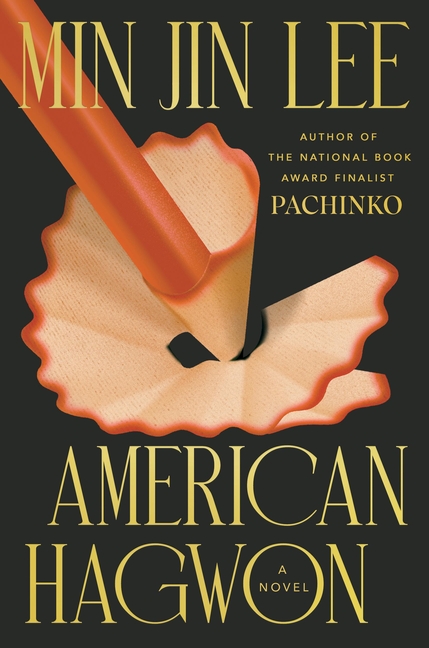
In schools and churches, hotel rooms and nail salons, law firms and fried-fish shops; in cramped, dingy apartments and luxury, gated communities, the men, women, and children in American Hagwon struggle to find satisfaction and meaning in a world that seems to grow less forgiving with each passing year. Once comfortably middle class in Korea, John and Helen Koh and their three children, Bo, DH, and Mido, find their lives upended, first by a shocking betrayal by John's oldest friend, then by the 1997 Asian financial crisis.
Well worth the wait ... Lee brings a precise scalpel to the Korean diaspora, both questioning its desperate pursuit of getting ahead and putting forth a new vision of nuanced characters fitting into a diversity of archetypes not often afforded to Asian characters in Western literature ... Universally, readers will recognize the quiet sacrifices of parents who love their children despite themselves ... With an exacting pen, Lee creates an automaton of intricate detail, where each character plays a vital role in staking out a path in a world marred by globalization, socioeconomic upheaval, and competition.
A simultaneously sweeping-but-intimate novel about the complexities of immigration, the fragile promise of America and the purpose of education, American Hagwon is also a classic page-turner populated by characters who are hard to leave behind at the end of 600-plus pages. It's an overwhelming reading experience, one that appeals to the head as well as the heart ... Lee is so deft that she conjures epiphanies out of the simplest material. I wish I could read to you the very last sentence of American Hagwon to demonstrate her mastery, but, instead, I'll just say that the simple possessive pronoun 'his' unexpectedly appears in that sentence and its effect is spiritually redemptive and emotionally shattering. What a novel.
Accessible but complex; noble without being highfalutin; and, at almost 650 pages, tremendous bang for the buck ... Almost a decade in the making, deeply researched and replete with details of bills, contracts, deals, salaries, settlements, wills and arrangements, American Hagwon might be the first epic novel of estate planning ... Some books are very worthy but held at arm’s length. This one demands to be pressed into friends’ hands.