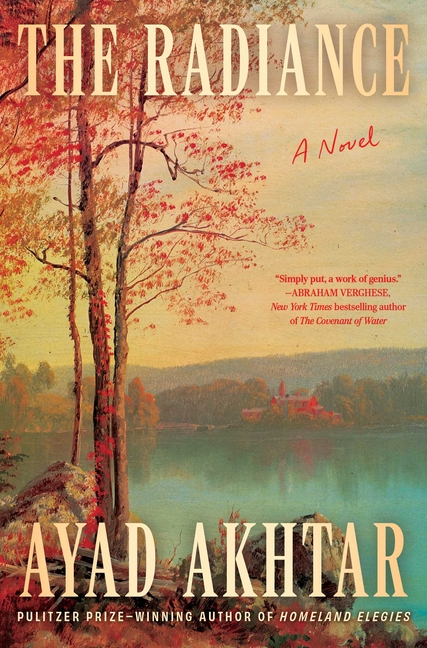
When a hit-and-run shatters more than his body, a writer is plunged into a spiritual awakening he can’t tell from madness. In its grip, he’s drawn to a brilliant campus colleague by an uncanny pull, and into a scandal that threatens to destroy them both. What begins as a provocative portrait of academic and cultural warfare deepens into erotic entanglement, the exposure of a family secret, and the mystery surrounding the narrator’s accident—both the violence and its aftermath.
Is this a campus comedy? A novel of ideas? A medical mystery? A spiritual quest narrative? Yes, sure. All of it. And a lot more, packed into less than 300 pages. But also: Who cares? Taxonomy is taxidermy. Whatever this book is, it’s alive ... The campus novel parts of The Radiance, toggling between satire and melodrama, trembling at the crossroads of ambition, learning and lust, are at once queasily suspenseful and somewhat familiar ... Ayad the narrator tries, in earnest and in vain, to stake out a demilitarized zone on the culture-war battlefield he has stumbled onto. Akhtar the author, though, is conducting a stealthy psyop aimed at detonating the certainties of combatants on both sides.
Among its many concerns, The Radiance addresses problems in higher education, including the erosion of attention spans, critical acuity, mental resilience and flexibility in a generation pelted by misinformation on the internet ... Akhtar rattles a lot of chains in this thought-provoking novel ... A profound reading experience.
It’s all a lot. And look, I know that autofiction can be a tough sell for readers, as can pages of erudite dialogue, not to mention descriptions of the ineffable. And yet “The Radiance” is one of the most purely entertaining and fascinating novels I’ve read in ages. Akhtar plays with form and wrestles with big ideas in a way that somehow avoids the pretension that so often accompanies such experiments ... Above all, the book is vivid, often funny, and genuinely affecting. The story is mysterious, even puzzling, but it’s not a puzzle that Akhtar is forcing us to solve. Rather, this is a book that tickles the mind and, in its best moments, soothes the soul.