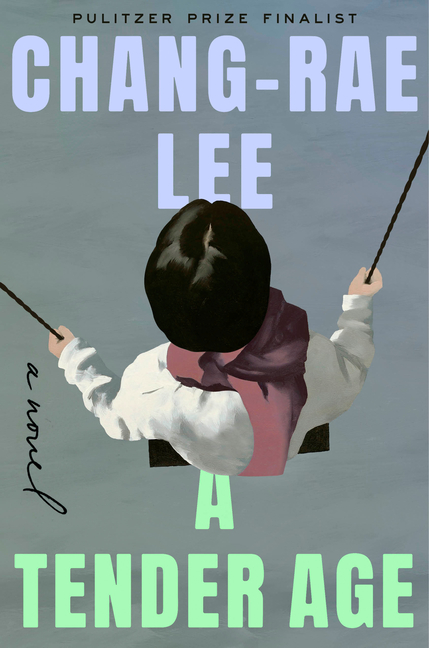
The novel’s a beautiful weave of flashbacks, an inflection point grasped only with the benefit of hindsight ... It would be tempting to describe “A Tender Age” as a tender-hearted coming-of-age tale — the title practically begs readers to do so — but there’s more going on beneath its dappled surfaces. The rage of children — their frustrations with grown-ups, fury at being misunderstood, curiosity about body changes—pulses across the narrative, the ways those prepubescent energies still imprint us. His adult voice intrudes on occasion...But the overwritten bits are few ... A Tender Age expands beyond its frame, evoking the tug of memory, a philosophical novel ultimately less concerned with a pivotal moment in childhood and more with the accretion of regret and the sweep of aging itself.
Whereas Lee’s prior novels are largely transnational in scope, A Tender Age is a far more insular affair. In some ways, the book feels like a return to Native Speaker, in that it emphasizes the American of Korean American assimilation ... Lee’s novels often end with an abrupt instance of violence, working like a release valve for narrative pressure. And as Jeon-Gi’s time at summer camp unfolds, the reader is made persistently aware of some fatal crisis to come. It’s a testament to Lee’s craft that, despite such frequent and furious foreshadowing, the actual event still arrives as a shock ... The pathos of A Tender Age lies in its young protagonist’s waning ability to hold the realities of the adult world at bay ... Lee shows how a young boy’s search for how an immigrant should be can easily slip into the uneasy terrain of projection and overidentification — especially, and often hazardously, through the channels of fiction.
Sensitive ... Winning ... Lee is particularly attuned to character building ... Lee has wonderfully evoked the unmatched urgency of this period of childhood, when everything, from a footrace to a girl’s smile, feels like a matter of life and death.