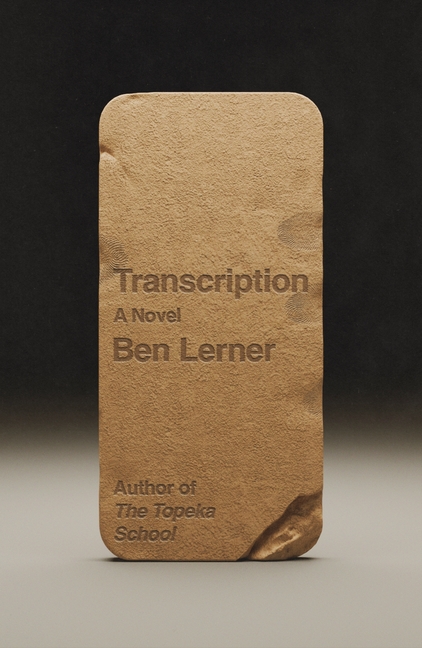
Dazzling ... A short, tightly organized chamber piece, Transcription is in some ways the most straight-up novel—or novella—that Lerner has written ... The novel has an elegant three-part structure, with a short middle section that acts like a fulcrum ... Another impressive quality of Transcription is its mixture of ingenuity and directness ... It’s all so interwoven that it’s hard to say which theme is on top at any particular moment, and none of the storylines goes the way the reader might expect. The novel is open to the idea that this may be a slightly niche form of art.
As talky and thinky as a memory play, sweeping up Kafka, Covid, glass flowers and much else in its narrow, rushing stream, it’s about how technology can sustain as well as stultify life ... A familiar story about the dynamic between an accomplished but distant father and the son who cannot quite reach him ... More of an exercise than a sporting event, like a powerlifter hoisting a Magic 8 Ball, the — yep! — triangle with its oracular messages bobbing within.
There is so much silence in this novel, so much air ... A novel speaks, yes, but it can also listen ... I suspect what is so interesting to Lerner about new technologies are the opportunities for misunderstanding that they introduce. Transcription is a chronicle of that confusion ... Struggling to describe the shape of this book just now, I reached for a pair of tights on the floor, dreadfully torn and twisted. That is the experience of this book, I thought, poking at the ladders; you fall straight through the story, just like its characters.