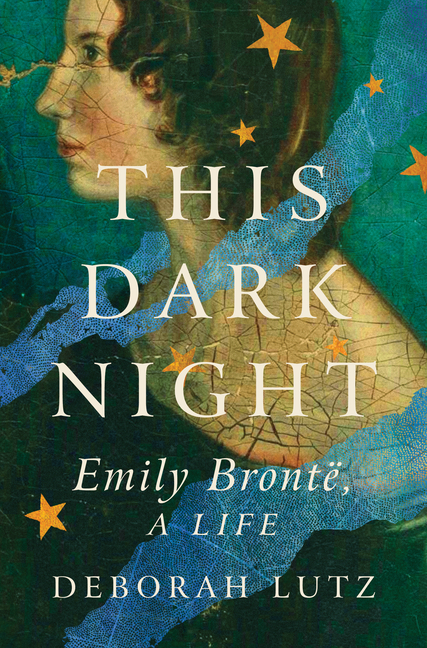
Drawing on formerly inaccessible notebooks and manuscripts, This Dark Night constructs a portrait of Emily Brontë, her famous writing sisters Charlotte and Anne, and the effect of their sisters' and mother's tragic deaths.
By the end, the reader understands much of what went into Brontë’s making, and leaves feeling grateful, buffeted and a little awestruck by the intense, self-contained, short-lived author of one of the world’s most esteemed novels ... In This Dark Night, Ms. Lutz, a professor literature at Pennsylvania State University, deploys flash and elegance when tracing the wellsprings of her subject’s genius to their sources.
Emily left behind tantalizingly little ephemera. Much of this biography ends up being speculative. But by drawing on a wide range of contemporary sources, the author is able to evoke the comets and heat waves her subject would surely have experienced ... Lutz unspools this short, seemingly uneventful life with sympathy, lyricism and economy — as well as humor ... Emily Brontë is a subject much of whose art lay in extrapolation — gathering experience and knowledge, magpie-like, wherever she could, to weave into her own. Ultimately, the reader is persuaded of Ellen Nussey’s words: 'She was in the strictest sense a law unto herself, and a heroine in keeping to her law.'
Fleshes out the author’s life through manuscripts, marginalia, drawings, and diaries ... Lutz’s is a tactile approach ... The biography, inevitably, is a family portrait. There is a tendency in popular accounts of Emily and Charlotte to cast the sisters as opposites ... Lutz occasionally invokes this contrast but for the most part offers a useful corrective ... Biography usually promises to demystify its subjects, but Lutz shows how contexts can accumulate around a mysterious figure without quite explaining her subject away.