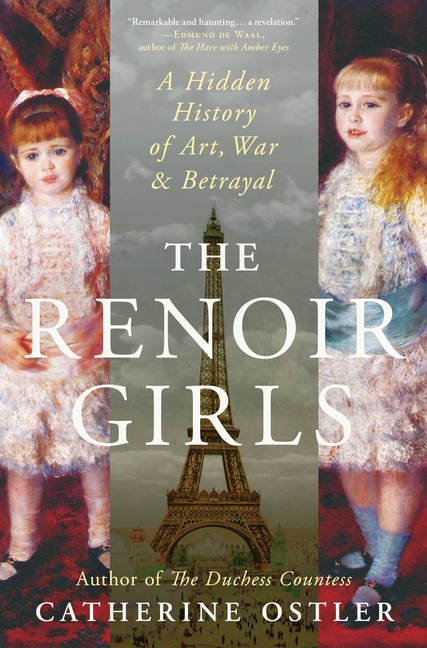
Three sisters, the daughters of a prominent French Jewish family, all painted as children by Pierre-Auguste Renoir. In the turbulent years from the Belle Epoque to World War II, one would marry an English aristocrat and escape; one would become a collaborator with the Nazis; one would die in Auschwitz. This is the hidden history of the lives behind Renoir’s beguiling portraits.
Feels like watching the unfolding of a horror film, albeit a very pretty one ... Proves immensely rewarding ... Ostler transforms history’s grand sweep into intimate profile. She has compiled a mountain of research among archives and interviews. You get the sense Ostler could walk into a party between the years 1871 and 1939 and tell you not only who’s who, but who’s sleeping with whom.
In The Renoir Girls, Ostler employs her research skills like an X-ray technician, peeking beneath the painting’s shimmering surface to reveal secrets and betrayals at the heart of both a single Jewish family and French society ... The betrayals in this story are endless. Ostler’s book is one more effort, dogged and impressive, to set the record straight.
In this thrilling book Catherine Ostler follows the story of the three Cahen d’Anvers sisters as they twinkle and twirl in belle époque Paris ... Paints a glittering picture of cake shops and cotillions, trips to the dressmaker and dancing till dawn, yachting on the Côte d’Azur and attending the races in Deauville ... Much more than an engrossing family saga about lucky people brought low ... Essential reading for our times, a terrible warning about how racial hatred can lie dormant for decades before reappearing with a vengeance in times of political and financial chill.