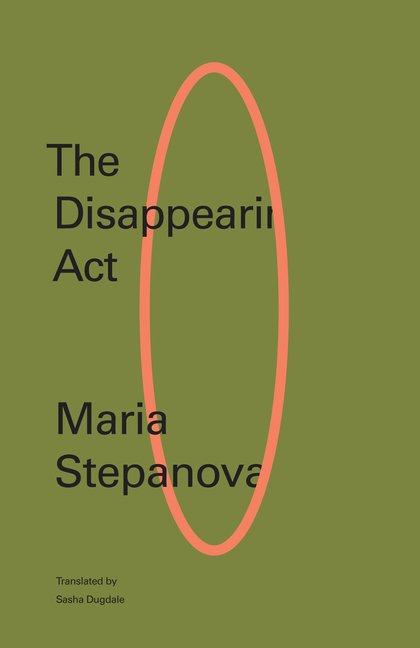
An exiled writer suffers from loneliness, shame, and despair, but then is invited to give a reading at a literary festival in a nearby country. The Disappearing Act oscillates between reality and dream, between an oppressive present and a lost past, between life and literature.
The Disappearing Act toys with the reader through oppositions and contradictions. Its setting is both specific and general; it draws on the author’s own experiences but places her alter ego in increasingly fanciful scenarios. But the greatest switchback is how it shows that if Stepanova, like her avatar M, is now a novelist in name only, she can nonetheless still do the job very well indeed.
Brief, dreamlike ... A fable of self-erasure ... Ms. Stepanova attends to the contradictions of her premise with humor and an easily worn intelligence ... It is literature about a disavowal of literature: an illusion of a book that cannot be written.
Excellent ... Oscillates between lyricism and irony ... Striking ... The most important takeaway from this story seems to be the realization that self-transformation, whether voluntary or not, is a painful process that requires symbolic and social death.