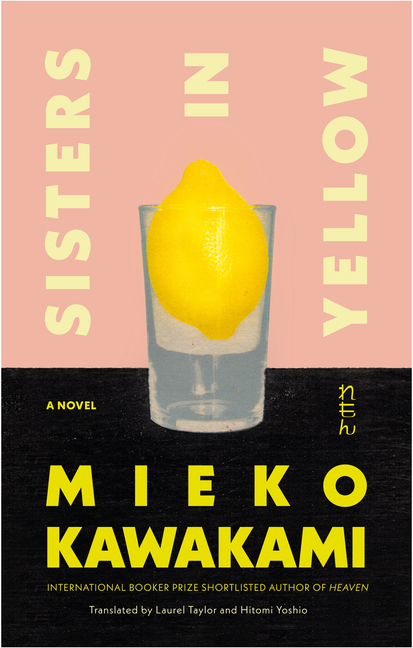
Minutely attentive ... Emotionally direct ... Readers will at once thrill and fear for Hana ... Sisters in Yellow makes quite clear that a home without men doesn’t mean a home without the violence and control of patriarchal society.
Thoughtful ... The first half of Sisters in Yellow epitomizes what makes Kawakami’s writing so great, melding incisive social commentary with a cast of memorable, scrappy, put-upon young people. But an abrupt tonal shift late in the novel, something seemingly endemic to all Kawakami’s work, results in the protagonist evincing a rather dizzying change in temperament and the narrative meandering its way through fits and starts toward a disappointingly rote dénouement. The serialized origin of “Sisters in Yellow” gives the story a spontaneous authenticity and whimsy, yet also feels responsible for the novel’s shortcomings, namely its overly drawn-out second half and the sidelining of a major character ... An enjoyable 12-episode season that could’ve been an eight-episode masterpiece.
Sisters in Yellow is marred in places by clunky exposition and overextended scenes. In addition, Ms. Kawakami’s prose can be flat and perfunctory. But its plus-points are its well-drawn quartet of characters and its compelling plot. Once Hana gets involved in her illicit money-making scheme, the narrative changes gear, tension levels are cranked up and what started out as a straightforward study of friendship turns into a fast-paced story of survival.