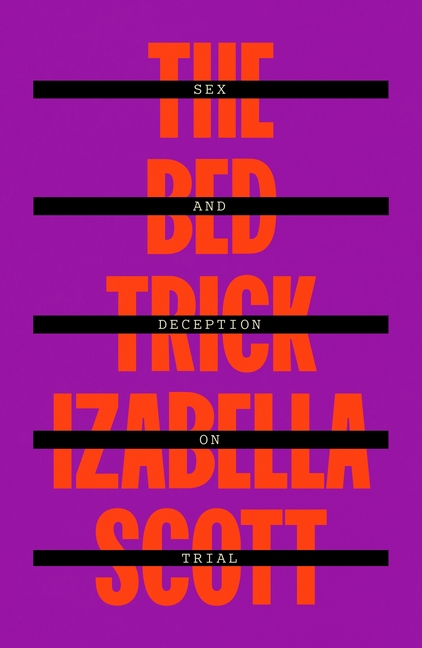
An account of a court case in which a woman accused her best friend of impersonating a man during sex, and won—a study of desire, performance, truth, and the stories we tell about ourselves in public, online, in love, and in law.
An astoundingly well-calibrated mixture of legal reporting and literary analysis ... The Newland trials are rich texts, and Scott pores over every transcript page, looking for meaning.
A strange kind of legal drama. The usual pleasures of reading about the courtroom—the vicarious thrill of being both detective and jury—give way to the slower burn of cultural analysis. Scott treats the tale of Gayle and Miss X as a rich and layered text, in which the inconsistencies are not lies to be triumphantly exposed but symbols to be recursively interpreted ... Characteristically, Scott avoids taking any hard stances. But her examples make clear that the interests of the powerful have always determined what kinds of lies are deemed to invalidate sexual consent.
Probably because The Bed Trick was first published in Britain, where many readers knew how the story ended, Scott forfeits much of the potential narrative tension ... I found myself yearning for a version of the book where I didn’t know the outcome ... The courtroom never feels immediate in The Bed Trick ... Scott confesses to feeling 'frustrated by the transcripts,' which are marred by 'so many interruptions, narratives cut short and missing perspectives. There was so much I couldn’t see.' By the end of the book, the feeling was mutual.