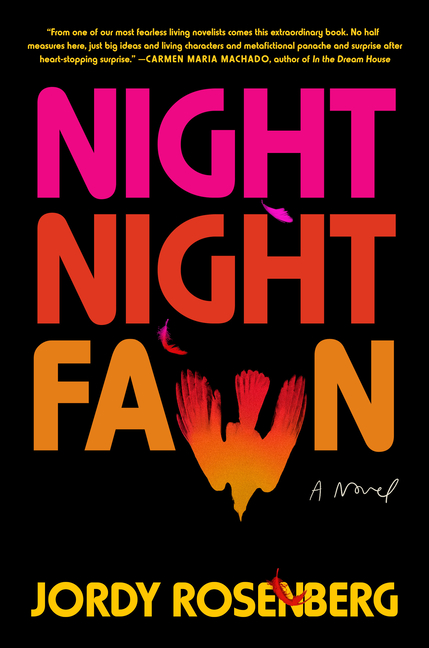
Rosenberg brilliantly probes the dialectic between a mother’s often cruel judgments and actions toward her adult child ... In the tradition of Philip Roth’s Portnoy’s Complaint, Night Night Fawn is a rant — and it’s a rant of comedic genius ... As grounded as the novel is in earthy humor, Night Night Fawn can also be mystically surreal ... Rosenberg’s departures from reality are archetypal and perceptual ... The reader is compelled to reflect on the many truths a single human being can contain: so frequently wrong, but sometimes delightfully so.
A striking, darkly comic portrait of a mind narrowed by disappointment ... ... Rosenberg isn’t only upending the rules of autofiction; he’s also pushing back against prevailing trends in trans writing ... As difficult as its main character is, Night Night Fawn succeeds thanks to her compelling, singular voice. Barbara isn’t a caricature but a deeply human portrait ... A pleasure to read ... For Barbara, impending death does not inspire a moral awakening, and Rosenberg never gives the reader an origin story that would excuse her cruelty. She is simply not a nice person ... The greatest expression of care comes at the very last moment, in a final, glorious moment of surreal grace at the end of the novel.