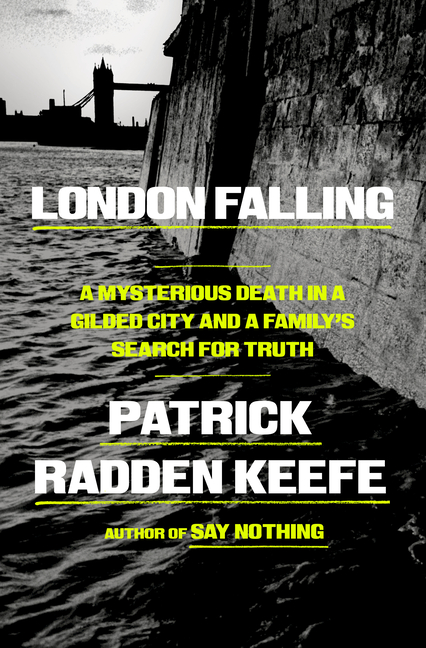
An account of a family devastated by the sudden death of their nineteen-year-old son, only to discover that he had created a secret life which drew him into the dangerous criminal underworld that lies beneath London’s glittering surface.
Patrick Radden Keefe establishes a series of links that not only open up this heartbreaking case but sound a klaxon on the cosplay of a whole generation ... London Falling is a book about a city, but it’s also a book about families and shows that even good parents can lose sight of their children ... Keefe’s work is so alive that one may say, in the way of the New Journalists, that his reporting has the texture of fiction.
Moving ... Keefe is attuned to the ways this story, like all stories, is largely determined by chance ... Densely layered ... Keefe proceeds by peeling back one layer after another ... Infernally gripping ... A brilliantly crafted book ... As a parent, it would be hard to read London Falling without reckoning with the sheer force of contingency that having a child brings into one’s life ... Affecting and profound.
While the book raises these thorny questions, Keefe seems reluctant to fully explore them. He is a master builder of intricate narratives, arranging the many pieces just so. London Falling suggests that Zac’s story is ultimately a crime story, in a city so warped by money that it’s losing its bearings. But it’s necessarily a family story, too. Keefe is too assiduous a journalist to be in thrall to the family’s perspective. Yet given the ordeal they endured, perhaps it shouldn’t be surprising that the narrative — in what gets emphasized and what doesn’t — hews so closely to their point of view.