PositiveBookforumMight have contributed to a deeper understanding of childhood on the left as it was lived ... Ayers Dohrn isn’t trying to analyze his parents on the couch of this double genre, but he does want to make sense of what he experienced as a fundamental betrayal: his parents’ dual loyalty to their children and to the revolution. Ayers Dohrn wonders if this duality is even possible to negotiate. Often, it seems the answer is no ... The focus remains decidedly on what he and his brothers went through in its specificities ... Is about struggling to understand how his mother and her friends could love the struggle as much as or more than their kin.
RaveBookforumA stunning debut novel ... From the beginning, the novel—flush with minute particulars—is invested in offering up an individual not for its own sake but to further solidarity with political prisoners in the United States and with the children separated from them by the state ... The Hill is a clear-eyed defense of the collective that won’t suppress the pain of separation, the violence of the state in keeping children apart from their parents, but Clark does not spectacularize her own fate, even in fictionalized form. If most political writings focus on the doing—the clandestine meeting, the bomb—and stop the action at the point of splinter, death, or capture, The Hill chooses to tell the story of the unhappily ever after when one becomes a political prisoner.
RaveBookforumFinally lets Schuyler stand out in front once more ... The next fifteen years of biography…require readerly patience of the kind demanded when sorting through who’s who in Tolstoy. They’re also the most unabashedly fun ... Kernan’s hand throughout is quiet, calm ... Kernan’s job is to let us drop in on the poet at work, the resilient friend in need. This is achieved ... The poems are fully formally and musically in control of themselves. So is Kernan as he represents the precariousness of Schuyler’s life and mind ... Kernan neither sensationalizes nor downplays what was true for the poet ... Here, Kernan’s method of citing Schuyler allows the poet to speak for himself—a move that is radical for those with severe mental illness ... Kernan is careful to tell it more like it was.
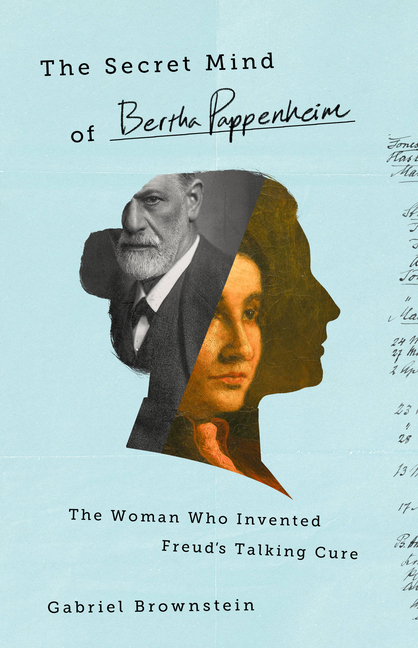
Gabriel Brownstein
MixedThe New RepublicHere’s the problem: Brownstein wants to make Freud the (very) bad guy of a story that had little to do with him, even if he had a great deal to do with the case becoming a story ... Brownstein thus rewrites up the notorious case, with his chatty, negative asides and interpretations taking center stage ... As author and son, Brownstein is overwhelmed by the research subject he must now try to understand.
Alexander Stille
MixedBookforumMany reporters claim to surface an under-told story, but Stille truly delivers ... Stille offers an exuberant and often moving journalistic account of how this project turned cultic, but he never quite seems to care that the cult started as a utopian Marxist-Freudian project —save that it adds to the wacko factor. Stille’s sometimes pat understandings of Freud and psychoanalysis leave a hole at the center of the story. This is not to say that Stille should have been a better historian, but without taking the particularities of Freud and psychotherapy seriously, the Sullivanians could be seen as a run-of-the-mill cult.