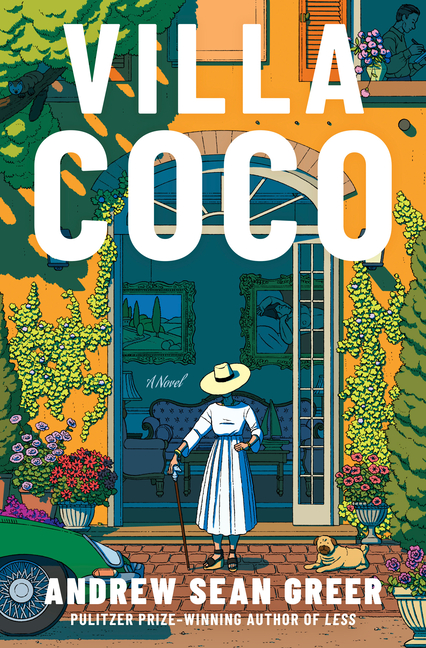
None of this is particularly suspenseful — the novel’s chief revelation is telegraphed about halfway through the story — but the writing is occasionally quite funny, and the tale of an expat’s life in the gorgeous, seductive Italian countryside is engaging, as anyone who has seen a Merchant-Ivory film can tell you.
Andrew Sean Greer’s Villa Coco has the summery, entertaining feel of someone writing whatever he feels like writing ... Full of larger-than-life characters, doing larger-than-life things and teaching larger-than-life lessons ... Greer has such a light, nimble touch — the color of a dress or the studied messiness of a room conveys a lot — that Villa Coco reads like a grand adventure, not a lesson. Long story short: I have no notes, other than that I wish it were longer.
Villa Coco is all but frescoed with figurative language, and Greer’s seemingly effortless storytelling belies the careful craft of his metaphors and similes ... This is a fundamentally pleasant book for unpleasant times, the kind of novel in which a car breaks down and that turns out to be exactly what should have happened. As Greer ultimately suggests, true charm is something you have to try on as you might a dead man’s suit, until what feels counterfeit becomes truly your own. It often begins in fraud and grows into a funny story—sometimes passing, fleetingly, through sorrow on the way. In that regard, the relentlessly charming Villa Coco is its own proof of concept.