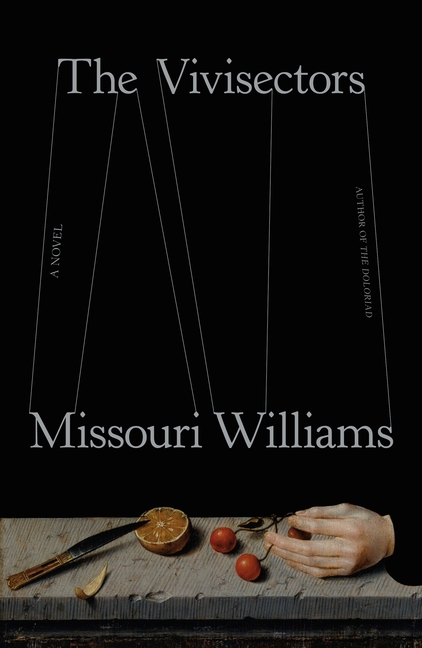
In a famed but crumbling university city overrun by nature, where power is held in a fragile balance between academics and a contingent of rogue gardeners, the reclusive narrator of The Vivisectors spends her days propping up the career of her needy and fraudulent professor boss. Then a controversy ruptures her careful routine: Adam, a contrarian student and an obsession of the boss, comes into heated conflict with a young professor, with both men claiming discrimination. The crisis subsumes the university, though the narrator is unmoved—not even the attempted suicide of her estranged mother has been enough to dispel her lack of engagement with the world. But when her boss commands her to befriend Adam, the narrator finds herself both caught up in the events threatening to tear the city apart and increasingly drawn to the alluring student at the heart of it all.
There is a limited, but great, lineage of novels of cancellation...and they are deeply discomfiting ones. Here, there is not even an incident to discomfort us. The novel promises a dangerous critique of contemporary sexual and cultural politics, and a narrator who sympathizes with the collective enemy; instead, it retreats into metaphor and meteorology ... Rather than analyze with any honesty the way humans tally up presumed evils on an inscrutable social abacus — or even depict it — The Vivisectors merely pre-empts all criticism, stepping back to vivisect its own pretense of sophistication.
Continues some ways down the path of developing, or at least exhibiting, her themes of brutality, entropy, and disgust for humankind ... The Vivisectors still feels unhelpfully caught in the crosshairs of the internet, and not only because of the many trollish remarks that appear in its pages. One of the narrator’s complaints about literature is 'that books had emptied along with the world that contained them because now almost everything that mattered to us took place inside our devices, on the abstract territories of the internet.' Is The Vivisectors disparaging this sort of 'emptied' novel, or attempting to give it newfound spiritual relevance? I tend to think it’s the latter. Either way, abstraction wins out.
What begins as a novel ostensibly about 'cancel culture' quickly shifts into a rueful elegy for a dying world ... Williams' language is muddy, overflowing, and fertile at once. People are objects, terrified of one another as they wake up to nightmarish scenes ... Throughout her fiction, Williams has been most interested in the malleability of language, reveling in its instability. The Vivisectors is about the ability of words to both create and destroy, and Williams is adept at writing about academia and cancel culture without moralizing ... In this eerie exploration of jargon and estrangement, Williams has crafted a beguiling dissection of morality.