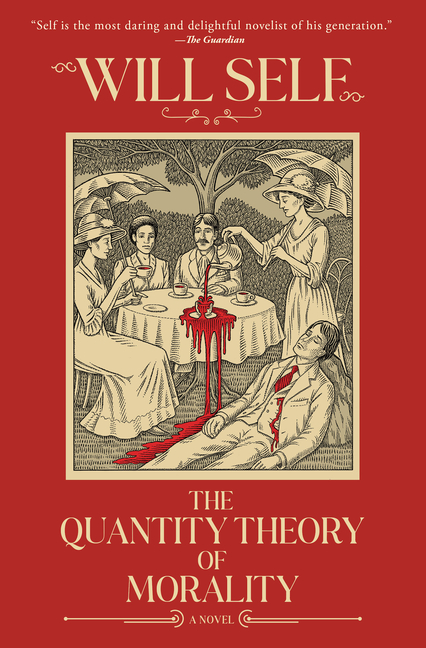
Self's middle-English characters appear trapped in a timeless go-round of polite chitchat in dinner parties that refract like a hall of mirrors, until one day someone says something to the effect of, "This way to the gas chamber, please, ladies and gentlemen."
Dazzling and sometimes wearying ... A clever novel, rewarded by rereading. But it is also frustrating, and rereading redoubles that frustration. Every criticism of the book is anticipated by the author, whose wry critique is little consolation. Sparkling and rebarbative, abrasive and relentlessly performative, it is, in other words, classic Will Self.
A dystopian farce featuring rampant English fascists burning piles of e-readers, as well as a 'semi-sentient' organic AI octopus called Margaret ... Told in Self’s customary brand of companionable misanthropy where even the most innocuous sentence has the petulant timbre of a diatribe. His prose, with its languid digressions punctuated by intermittent bursts of wit, achieves the rare feat of being lively and sluggish at the same time ... There’s a lot going on here but in the midst of it all we can make out Self, 64, reckoning with his own quintessence as he enters his dotage.
A coruscating satire about a group of metropolitan sophisticates trapped in an endless round of backbiting, gossip, infidelity and self-loathing ... At the heart of The Quantity Theory of Morality is a lamentation about our collective ethical compass gone askew.