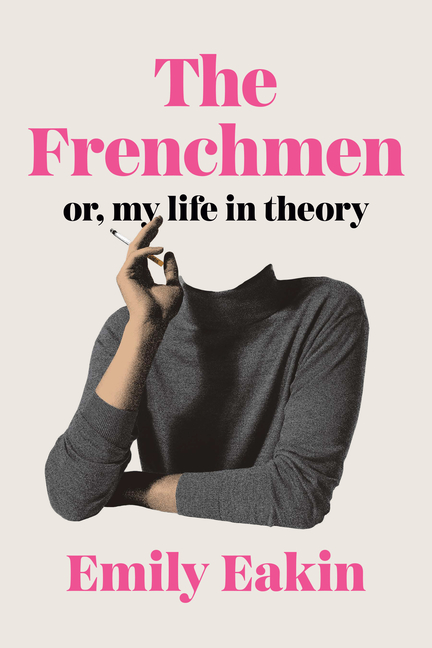
...an exquisite blend of gossip, memoir, and philosophy, of recondite ideas explained with admirable lucidity, as well as a chronicle of human folly. And, despite her eventual disillusionment with theory, Eakin persuasively argues that what once seemed to be the most esoteric of intellectual pursuits has in fact had a profound effect on American culture ... Much of the entertainment offered by The Frenchmen comes from the tea Eakin spills on men who were once presented as disembodied monuments. In life, they were narcissistic, imperious, and histrionic—that is, they were very French ... While Eakin provides an excellent primer on the key structuralist and poststructuralist ideas through The Frenchmen, it’s tempting in the end to view the whole enterprise as a bit absurd, a sort of elaborate mirage that ultimately went poof.
The Frenchmen is a marvelous book. It’s gossipy and personal and completely fascinating, which is exactly what you hope for with this particular bunch of thinkers. All of the stories you half remember about the French postmodernists are here told in careful, lively, playful detail. This is intellectual anthropology as it ought to be: cafe gossip with the footnotes left in. It makes you wish you could take a seminar from Eakin and makes you miss those glorious days in graduate school when you spent more time drinking beer and talking about philosophy than writing or even reading the stuff ... The book’s organizing joke is that these men who pronounced the author dead and biography a category error nonetheless led lives of pulpy, operatic incident. Eakin arranges them not by chronology but by theme (Murder, Madness, Words, Evasions) and lets the biographies carry the ideas, the lives doing the work that academic analysis won’t ... The book is, among other things, a clinical and very funny study of intellectual desire: what exactly we want when we say we want ideas ... That said, Eakin is more curious about the men than about their arguments, and that’s my other small complaint about the book.
Part memoir, part biography, part philosophy primer, The Frenchmen interleaves Eakin’s bildungsroman with careful close readings and details of her subjects’ lives ... For those of us who learned to see French theorists as stars in a void, as discrete but brilliant points of light, reading The Frenchmen feels like being handed a map of the constellations. All sorts of hitherto obscured connections are illuminated ... Though Eakin’s account of this intellectual lineage is impressively lucid, it is not always chronological, and its episodes can be hard to situate in time ... Theory may not have taught Eakin to live with ease, but it did teach her 'a new way to think,' and its critical lessons have endured.