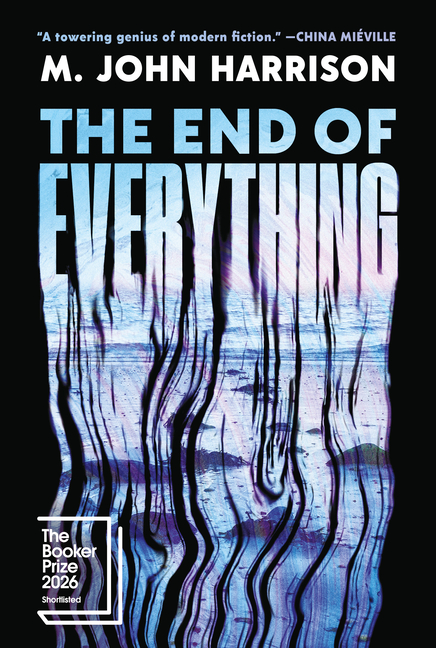
Phillip Tennent makes his living at the tideline, collecting artifacts that wash up from the Channel. It's been years since the crisis changed everything, but its exact nature remains obscure. Government barely functions, the seas are full of new creatures, an entire continent has been mislaid. It feels like the end. Now Phillip has fished out of the water an object he can't keep. A creature that keeps changing. An artifact he must take inland, before it destroys everything he thinks he knows.
The End of Everything is brief and confounding; it also doesn’t care a whit for the conventions of dystopian fiction ... Violence is a hallmark of the postapocalyptic novel, but Harrison’s characters kill with a paucity of forethought that makes McCarthy’s rogues seem like Montessori teachers by comparison ... The subject of Harrison’s experiment is larger than one referendum on territorial boundaries—or any single Event at all. He seems to be asking how humans will respond when they discover, en masse, that they are no longer in control of the planet’s destiny. Really, The End of Everything is a novel about surrender ... As bleak as this interpretation may sound, the novel is expansive rather than dismissive. It reaches out for connection, feeling at once bizarrely creative and, on a psychological level, strikingly familiar. In a short novel, in a wholly original way, Harrison has managed to sketch not just a world, but a worldview.
A fascinating, sometimes frustrating and thoroughly original new novel ... This book, a masterly exercise in restraint, unsettling beauty and elliptical writing that can enlighten even when it obfuscates ... This grim but powerful book portrays the many incompatible states of existence, and the baffling collapse of time, that stem from extreme crises.
Harrison, as always, interweaves precise descriptions with disquieting lacunae ... Dreamlike and baffling, The End of Everything elucidates humanity’s disintegrating existence with strange clarity.