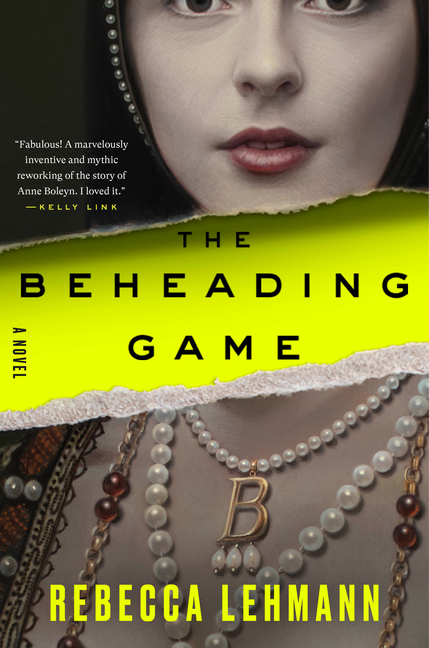
We all know what happened to Henry VIII’s second wife, Anne Boleyn. But what if she woke up the day after her execution and took it upon herself to seek justice?
Steadily shifts from a convincing portrayal of 16th-century political life and material culture, where the only thing amiss is Anne’s undead status, to a more magical, mythical story ... Lehmann resists the temptation to celebrate her protagonist through presentist fantasy ... Lehmann’s 16th-century world is well researched and persuasive ... The author never uses history as set dressing ... Lehmann proposes a kind of restoration of female strength that has always been with us, if we know where to look ... Lehmann encourages us to think about Anne’s influence less in terms of her too-short life than in terms of her long-lasting legacy, which still courses with—well, if not lifeblood, then nevertheless something vital, not quite real but still true. Lehmann captures this uncanny energy in her speculative rewrite of Anne Boleyn’s death, offering something that is less an 'alternative history' than a cultural study of what exactly keeps her so alive in our minds nearly 500 years after the fact.
I approached this book, and its wayward premise, with trepidation. But it won me over with its inventiveness, its exuberance and a portrayal of Anne and Henry’s marriage that is more complex and nuanced than many a conventional telling ... My only fear is that this book will spawn copycats with less talented novelists than Lehmann raising all manner of historical heroines from their graves.
Tudor history through Anne’s eyes is a revelation, and though she is no innocent, she does not deserve her fate. This tale is beyond strange, but undoubtedly a compelling read.