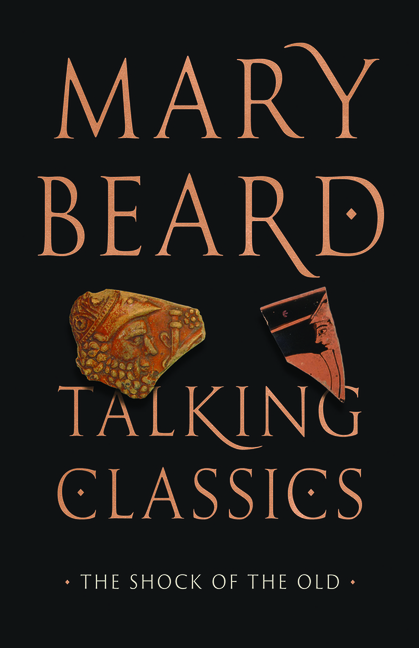
Why the ongoing fascination with the ancient world? This approachable book asks why, for better or (sometimes) worse, antiquity continues to exert such a powerful hold on the contemporary imagination.
Most of Talking Classics is drawn from four lectures Beard gave at the University of Chicago in 2023. If the word 'lectures' makes you want to head for an exit door, you don't know Beard's style ... Talking Classics offers readers plenty to chew on.
A wide-ranging and entertaining whence-and-whither discussion of her field, she clearly has in mind a potential worldwide classroom, but a justly skeptical one ... Full of Beard’s old joy at the unexpectedness of ancient realities ... I find these conclusions unsatisfying. Beard rejects (in uncharacteristically snotty tones) claims that classics gets you ahead ... Beard certainly has nothing in common with the classics professors of literary myth (and occasional current reality) who, after a lifetime of talking only to one another through their professional journals and conferences, notice that classics is in trouble and mount the podium to explain why it shouldn’t be. Instead, she partakes of a teacher’s most organic resources: curiosity and delight. We should stop worrying about classics, especially when someone as capable as Beard is presenting and performing it.
In this short and engaging new book, which is part memoir, part manifesto, the most prominent classicist of our time argues that the ancient world’s appeal is not as a comfort blanket but as a disruptive challenge.