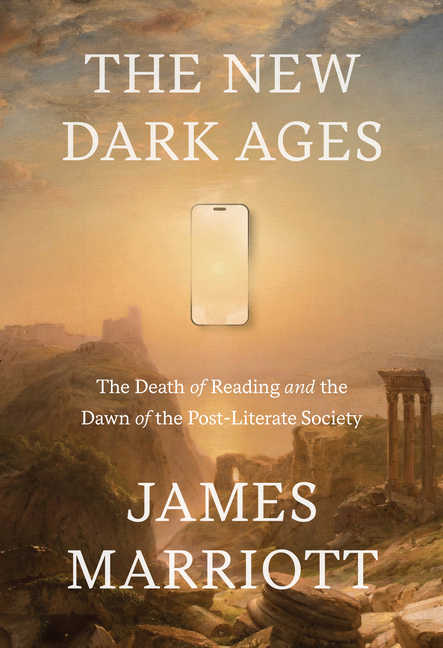
It’s not by chance that the rise of new printing technologies coincided with the age of revolutions and the decline of the aristocratic order. At the beginning of the modern era in Europe, a critical mass of people could share and debate ideas about individual rights, the purpose of government and scientific truth. With growing literacy came the world we recognize today. Now, around the world, the number of people who read is in free fall. In this critique, Marriott assails the culture of modern life and singles out the written word as the best defense we have for a more enlightened world.
For a doomsayer, Mr. Marriott is good company, and it is a shame how many people wouldn’t dream of reading his eloquent, learned and admirably brief book.
Marriott thinks the 'digital bombardment' from smartphones is 'the major culprit' in producing 'a post-literate future that resembles the pre-literate past: mystical, tribal and autocratic.' He might, however, be insufficiently pessimistic.
Marriott’s slender volume is well timed to restoke the fires of this debate just as it threatens to burn out. From the start, though, The New Dark Ages is too ominously titled. The need for a grabby name may be partly responsible for the growing exasperation of the literacy wars ... Marriott ably diagnoses our reading woes, but his prognosis is less persuasive ... Yet the broad thrust of Marriott’s argument—there is a decline in reading that is antithetical to the progress of the Enlightenment—strikes me as persuasive and deeply troubling.