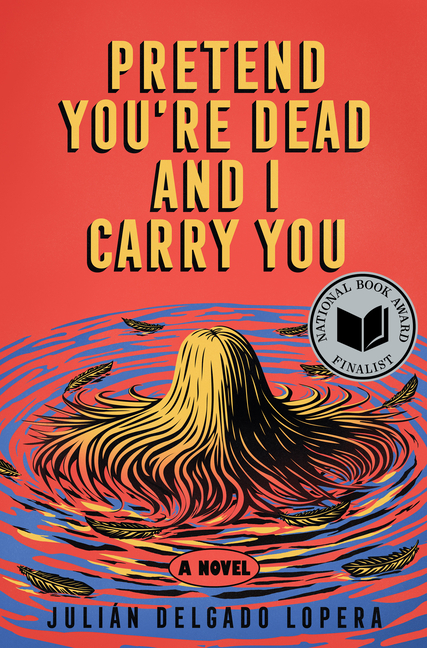
Cloistered in a dreary Bogotá apartment, Ignacio's light has dimmed, leaving his teenage daughter, Valentina, to raise herself in the wake of her mother Alma's death. Lonely and love-starved, Valentina aches to discover the details of her mother's drowning, and for her father to snap out of his depression. But Ignacio can't. He spends listless afternoons smoking cigarettes in long blonde wigs, telenovelas humming in the background, haunted not only by matrimonial guilt, but by memories of a young man he once loved and betrayed. From Ignacio's tragic past emerges the luminous queen of Bogotá's queer underground, Mamadora Eléctrica, the wise travesti who he first met under the silvery lights of Club Aquario when he was just a shy country boy. With Alma gone, Mamadora steps in as a mother figure to Valentina the way she once did for the girl's father. But as an expert in Travesti Lore, she fears the worst: that Ignacio's self-destruction may have unleashed a curse on them all.
Delgado Lopera's inimitable prose blends English and Spanish as Mamadora Eléctrica's feisty yet tender torch song snakes each tributary that has reduced Valentina's father to 'a mummified bird.' Pretend You're Dead and I Carry You resonates with a timbre similar to Joseph Cassara's The House of Impossible Beauties and Camila Sosa Villada's Bad Girls as it rushes forth from an inspired and extraordinary imagination.
Penned in lyrical Spanglish, Pretend You’re Dead and I Carry You never apologizes for the characters’ fraught behavior and often brutal treatment of one another ... Brutal, lyrical, and stubbornly human, Pretend You’re Dead and I Carry You asks whether love can survive the people doing the loving.