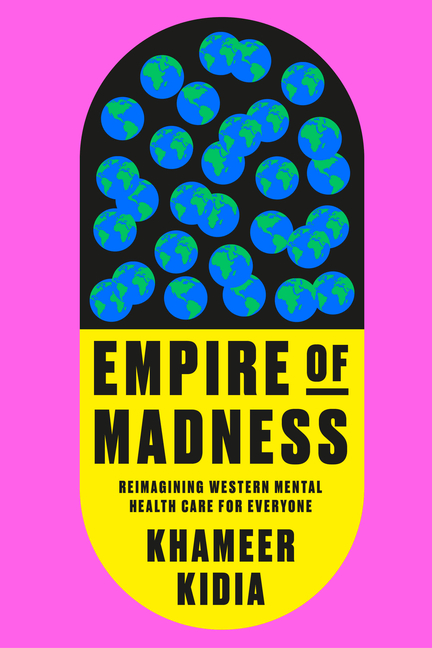
A rethinking of the Western approach to mental health, which treats the symptoms rather than the exploitative systems causing our distress, offering lessons from the rest of the world.
Ambitious but uneven ... Provocative ... Kidia’s conclusions are compelling, but by now they are somewhat familiar ... There are so many threads in Empire of Madness that it is no wonder Kidia cannot tie them all together.
What do patients actually need from medicine? And what is the doctor’s role in delivering it to them? Kidia insists on the hybrid role of physician-advocate, duty bound to use their institutional authority to push for structural change in the wider world ... Makes an eloquent case for the practice of 'social prescribing,' in which health care workers 'prescribe (sometimes via literal written prescriptions) social and structural resources' ... In essence, Kidia has written us a prescription for more humanity, both at the structural and interpersonal levels ... As he shows over and over, there is no shortage of evidence that more humanity—whether in the form of time with friends and family, a connection to our community, or a welfare state that underpins a dignified life—is the cure for what ails us.
Difficult to sum up succinctly ... The knotty problems Kidia catalogs have complex histories, and their solutions are just as complex. In a moment when snake oil seems to be the currency du jour, his candor is refreshing.