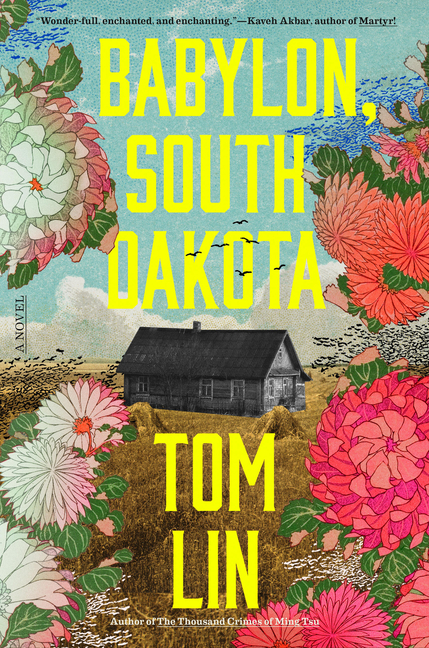
An American West saga about a Chinese American family trying to survive on their Dakota farm as a mysterious, and morally dubious military secret shapes their lives.
At times, it feels as if the author has made the perverse decision to take everything that worked in the first novel and get rid of it. Instead of a ruthless central character moving forward on a vicious quest, we have a family in a static location and little in the way of overt conflict. Instead of purposeful sentences and short paragraphs, the writing is looser, forsaking quotation marks and embracing a register that aims at mystic lyricism ... The vagueness is deliberate, but it makes the world of the book feel strangely weightless ... Rather than building a coherent reality or observing the changes in his underdeveloped characters, Lin indulges an appetite for florid writing that was mostly kept in check in his debut novel ... Lin does have a sharp eye for the beauty of the natural world, and there are moments of thought-provoking tenderness in the novel. Glimpses of Saul and Mei’s back story in China — including a romance conducted by letter during the Cultural Revolution — light up the book and remind you of the author’s talent. Unfortunately, too much of that is invested here in whimsy and purple prose.
Spectacular ... Vague details about the mysterious government-owned acre and its nuclear secrets are revealed piecemeal: Project Methuselah, the Qian Device, prototypes, multiple realities, escaping death. Lin’s magical epic proves to be an extraordinarily immersive literary labyrinth.