PositiveThe NationSomething that would best be described as metacriticism by way of auto-theory: LaBarge uses her own life and her subjective encounters with art to consider the state of criticism and memoir ... Refracts herself through critical analysis. And the result is a book filled with intriguing, even brilliant, moments that inspire innocent awe not unlike that which comes from beholding one of the mysteries of perception. But in the end, by definition, Dog Days cannot cohere. And this lack of wholeness makes for a discouraging experience for the reader, as the sections of critical writing crescendo toward conclusions that never sound ... The representation of a luminous, well-read mind relinquishing the need to make sense of life through a conventional narrative.
Zachary Lazar
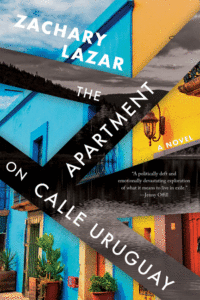
RaveBOMB MagazineLazar’s Calle Uruguay reckons with the period and its impact on our national imaginaries, making it something of a historical novel despite its immediacy ... When everything seems to be spinning out of control, when Bell can no longer bring order to his disorderly world, he returns to abstract, visual expression. At a time that feels increasingly difficult to recognize, the imagistic world becomes a retreat that offers a familiar, if unintentional, estrangement from the chaos. The book hurtles forward, propelled by this chaos, but ultimately ends up precisely where Bell began: with art as a redeeming and reorienting practice during difficult times.