Pan4ColumnsThe School of Night, Karl Ove Knausgaard’s latest novel published in English, translated by Martin Aitken, is the fourth volume in a still-unfinished cycle with the overall title The Morning Star. It is the most ambitious endeavor by this extraordinarily ambitious writer since the conclusion of My Struggle, the autofictional series that made him famous. For now, each of these new books is presented as a freestanding narrative, though perhaps they will take on a different weight and significance when the project is complete ... The plot is a variation on one of the most common themes in European literature: the man who gives up everything for the object of his ambition (power, fame, or money—glory in all its forms), leaving a trail of broken relationships and discovering, at the end of his journey, that his accomplishments are insignificant, his trophies pathetic, and his life an immense void ... The narrator of My Struggle also suffers from many of these ills. Some of the series’ best pages are devoted to the conflict triggered by an overgrown artistic ambition that leads the narrator to publish a text doomed to hurt those he loves, knowing they will pay the price for his eventual success ... Indeed, the Karl Ove of My Struggle is considerably more complex than the protagonist of The School of Night, who truly lacks nuance: he is a man with only one face, and this face is horrible in a way that is not difficult to recognize ... Perhaps this was Knausgaard’s intention ... After all, tonal instability, the combination of tragedy and comedy, is characteristic of some of the best versions of the Dr. Faustus myth that the book constantly references ... Knausgaard has repeatedly said that he never plans and hardly ever corrects his books. I suppose this favors the production of the massive amounts of text that he publishes. This method results, in the best cases, as in the pages of My Struggle, in passages of writing whose immediacy and energy are enough to hold the reader’s attention, but it is less effective when it comes to building a lucid and compelling imaginary world. Despite the length of this book, I was left with the impression that it is a barely laid-out sequence of loosely woven scenes featuring nebulous characters seen through the eyes of a narrator whose perspective is desperately narrow, linked through a plot whose overall arc is rather conventional. Perhaps when the Morning Star cycle is complete, this trunk will find the missing parts and the definition that eludes it; the five hundred pages of narrative prose that make up The School of Night have, for now, the feeling of a sketch, a fragment.
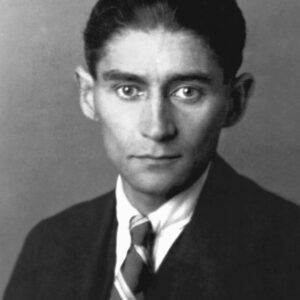
Franz Kafka, trans. by Ross Benjamin
Positive4ColumnsThe result is a text more faithful to Kafka’s handwriting but also more difficult to read. This is due not to Benjamin’s prose, which is consistently elegant and precise, but to the nature of the edition ... Benjamin presents the notebooks as they were written, with the repetitions, opacities, and grammatical errors that are characteristic of the drafts of even the most skilled of writers ... I have not the slightest doubt that this is the edition that should be used in classes where Kafka is taught, and its excellent apparatus of notes will illuminate references that otherwise would be completely illegible. As for the reader looking for pleasure, the decision seems to me a harder one ... When the desire to read this or that passage of Kafka’s notebooks arises, I will resort to Benjamin’s translation—but I’m glad that my first introduction to them as an adolescent was through Max Brod.
César Aira, Trans. by Katherine Silver
Positive4Columns... while the volume may be slim, it is a surprisingly rich work. For those who have not read [Aira], it is also an excellent place to start a relationship ... all the decisive elements of his work are here: the proliferation of events that link the numinous with the most banal domesticity, the cosmic with the inhabitants of a middle-class neighborhood in Buenos Aires; the more or less esoteric references to contemporary art and the philosophical tradition caught in the web of a writing that is deceptively plain; the book as a loose gathering of disparate narratives that adopt the pose of casual improvisations, textual toys fabricated to keep boredom at bay and wonderment close at hand.
Clarice Lispector, Trans. by Benjamin Moser & Magdalena Edwards
Positive4Columns\"The Chandelier is an extraordinary book ... imperfect, uneven, and immensely difficult as The Chandelier may be, it contains pages and paragraphs of greater literary substance than you will find in entire libraries of other writers ... The Chandelier already contains the germs of the best Lispector, but its brilliance is frequently muddled by the unstable, indecisive compromise she tries to broker with the narrative tradition (as exemplified by the gothic novel and the bildungsroman) that she obviously loved but that was never the best vehicle for her writing.\