PositiveThe Irish Times\"Barry won the Walter Scott Prize for Historical Fiction for a second time for Days Without End. But these books are more the heirs of Mark Twain and his denunciation of Walter Scott in Life on the Mississippi ... Time moves strangely in the disarming, dreamy trance of this novel ... Barry’s emphasis on Tennyson’s naivety and shock – on surviving a “life without information” – gives us a good, sad man caught in history’s undertow: a beautiful literary creation, but that same profile can read as a refusal to credit Tennyson with his own agency, uncomfortably close to the old lies that Reconstruction failed and that freedom dreams were both given and revoked by whites ... A Newer World felt somewhat vaporous on my first read, but actively resolute about irresolution on my second: Barry is concerned with \'aftermath\' as something besides a name for devastation. The book thrums with memories of incomplete states, thinking about absolution, oblivion, reparation, affection.\
RaveThe Irish Times (IRE)The book dwells in pressure yet gasps for beauty ... The Broken King contributes to a long legacy of Black disabled authorship from Sojourner Truth and Harriet Tubman to Lois Curtis, Audre Lorde and Sami Schalk ... While he tells us that suicidal ideation ceaselessly \'seduces and demands that I go,\' Thomas offers readers an incantatory guide to the rhythms of remaining: \'I stay for a moment and then another.\' Stay longer, please.
Kevin Barry
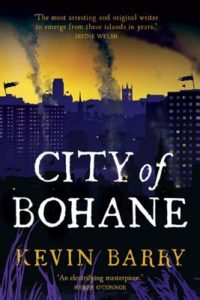
RaveThe Los Angeles Review of BooksBohane is a cutthroat warren of sparring gangs and sinister alleyways, a hybrid place full of warriors and wastrels that can still, for all the infighting, speak with a collective ‘we’ that constantly gauges its own bad moods … Within Barry’s narrative world, it matters less who was betrayed and what was suppressed than that things are besmirched. History hurt; you learned it by rote; now get on with your dancing and dying. The plot of the novel, simple and generic but great fun, gets on fine … Barry has written a ripping good tale about dangerous people wrestling for control of an uncontrollable place, which is at once the best caricature of contemporary Ireland yet to appear this century and a book that seems willfully disinterested in claiming that title.