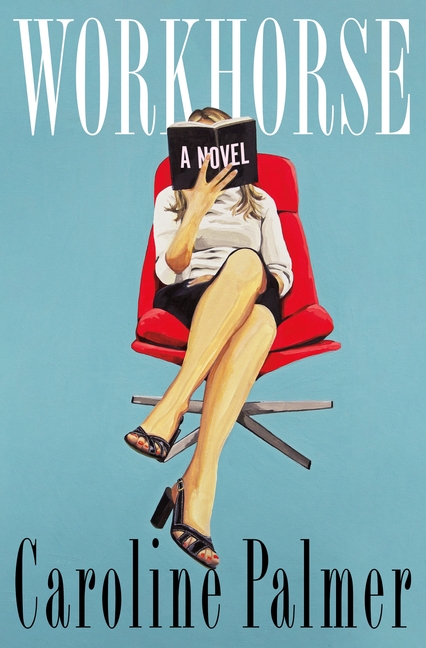
A richly drawn, unsettling, and wickedly funny story of envy and ambition set against the glamor and privilege of media and high society in New York City at its height.
Caroline Palmer’s debut novel is certainly in The Devil Wears Prada territory. The former editor of vogue.com, who spent a fair chunk of the 2000s at American Vogue, brings impeccable insider knowledge to her takedown of the absurdities and indignities that lurked behind those glossy covers in an era when their influence seemed unassailable. Plucky Clo, our narrator, is the classic outsider breaching the walls of a rarefied bastion — initially, and quite amusingly, battered at every turn in a snobbish designer-clad hellscape where superiority functions as a kind of fuel ... There’s a distinct (although less homicidal) touch of the Tom Ripleys about this tale of success at any price ... Workhorse is a diverting read, often punchily funny about fashion’s 'land of make believe', which Palmer seems to love and loathe in equal measure, and washed with the wistful Gatsby-like glow of punctured gilded dreams. At more than 500 pages it loses propulsion quite often as a wild-eyed Clo wallows in her insecurities — a brisker edit would have made this a sleeker beast. But it sets us up nicely for the arrival in May of The Devil Wears Prada 2.
Workhorse comes in at more than 500 pages, which is a long time to be in anyone’s head ... You could have cut a full third of this novel and I don’t think it would have suffered for it. If anything, that would have allowed some of Palmer’s truly brilliant writing – such as her gorgeous description of a New York power cut – to further stand out ... What elevates Workhorse beyond its central theme is a more profound exploration of the emotional burden carried by the perpetual outsider.
The weakness of Workhorse is its length, taking a third of its 560 pages to introduce a twist that assures you it’s darker than other strappy-sandal tales. Numerous plots sag, losing their deviousness and dread ... There’s still much to be enjoyed ... However, Workhorse is about the pursuit of perfection, and so to appreciate it is to also wish that it itself was more winnowed. With luck, the next book Palmer writes will be a trifle more svelte.