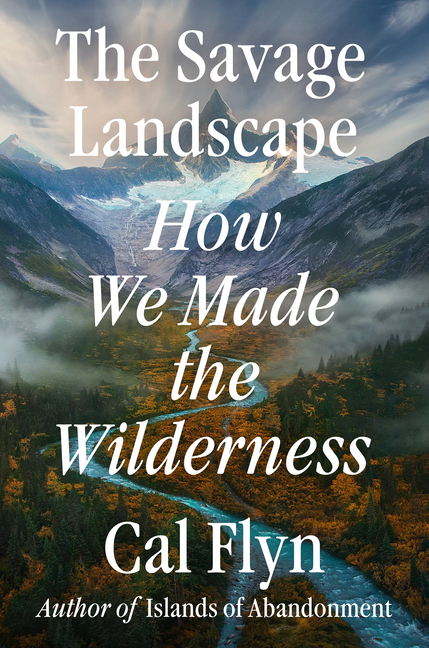
From the blacksand beaches of Iceland, to river crossings deep in the Amazon jungle, to the barren beauty of Antarctica, wildernesses make up some of the world's more alluring natural landscapes. But what is a wilderness, really? The Savage Landscape takes us into these wilds—deep into dark forests, to the tops of mountains, and into the hearts of deserts—asking questions about the nature of wilderness, its preservation, and its meaning.
Flyn’s absorbing book documents a pair of quests ... She is excellent company: funny, soulful and casually brilliant, weaving together philosophy, literature, post-colonial critique ... Flyn’s prose, fluent and occasionally purple, will feel familiar to readers of prestige nature writing ... Ultimately, Flyn is a more compelling thinker than reporter. Things get interesting when she wades into theoretical thickets. In one deft passage, she ponders the notion that wilderness 'comes not from the absence of humans, but from the presence of that which is incompatible with them.'
An extraordinary exploration of wilderness and its meaning that takes us from the ocean floor to volcanic peaks ... A wondrous personal journey to locate and understand wilderness. It’s a work of extraordinary physical and narrative movement that takes us from the depths of the ocean to volcanoes and icebergs, but is also a journey into our own psyches, and the stories we tell ourselves about 'wild' landscapes. Above all, it is a reminder that the places we might conceive of as empty or barren are no such thing; that within wildernesses there is abundant life, both human and nonhuman.
In no small part the book is an investigation of fear as much as delight. As she explains, horror has always been a necessary part of the original experience of the sublime, alongside delight. Where many contemporary nature writers emphasise joy, Flyn leans into discomfort — physical, intellectual, moral. The result is so much richer and more serious ... And where other nature writers spatter wildlife facts behind them like scat, Flyn offers insight more often than information.