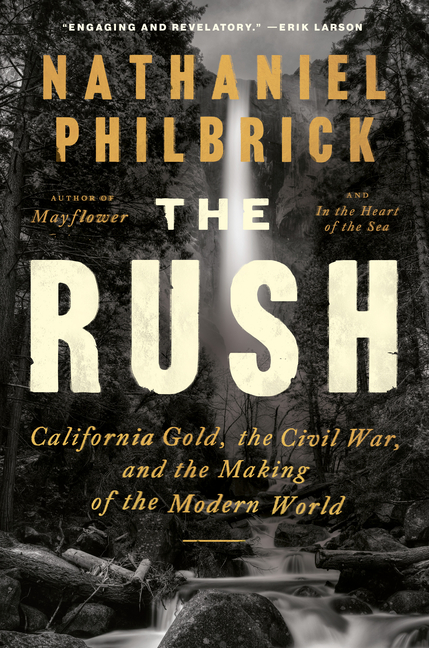
In January 1848, a carpenter spotted flecks of gold in a shallow stream at Sutter’s Mill in California, triggering the greatest voluntary migration in U.S. history, as hundreds of thousands raced west in pursuit of sudden wealth, reinvention, and power. In The Rush, Nathaniel Philbrick transforms the Gold Rush from a tale of sudden riches into the origin story of America’s modern contradictions—capital consolidated at dizzying speed, democracy in thrall to private power, xenophobia weaponized in the name of liberty—and a stubborn belief in the American experiment that refuses to die.
Compulsively readable ... Complicates the familiar account of hopeful panners and canny outfitters, pairing the romance with the reality and drawing more characters into the story ... Philbrick is a richly talented raconteur and a master of the cinematic vignette ... Traces a somewhat meandering thread from the gold in the foothills to Leland Stanford ... Intriguing rather than fully convincing, the case might have been made stronger with more analysis and argument than Philbrick’s light authorial touch tends to allow.
Sumptuous ... Beautifully portrayed ... There’s an echo of Mark Twain in the book’s cadences ... Conjures time and place in lush detail ... Philbrick has written an engrossing account of tensions at the heart of our republic.