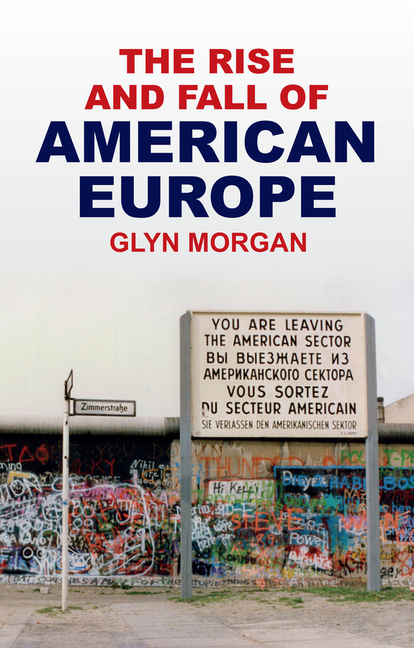
At the dawn of the Cold War, the US administration pushed reluctant Europeans to create a federation of democratic states. In doing so, they gave birth to an American Europe – a new political order protected by the US military and buoyed by transatlantic trade.
Europe now faces a stark reality. The Trump Administration dislikes NATO, considers the EU's trade policies "worse than China['s]," and attacks the banning of nationalist parties. Many in the MAGA movement are similarly hostile to Europe, which they see as an overregulated museum, a US dependency, powerless on the world-stage.
This book explains why American Europe fell from favor.
Prof Glyn Morgan has written a brilliant book that makes an outstanding contribution to the study of transatlantic relations. A slim volume, it’s an excellent explainer on the challenges facing Europe at a fraught time. Morgan usefully reminds us of how deeply involved the US was in begetting the European project in the first place whereas under Trump 2.0 it seems intent on undermining that project.
The originality of Morgan’s book lies in its claim that European unification—first the European Coal and Steel Community, in 1951, then the European Economic Community, in 1957, and finally the European Union, in 1993—was more an American creation than a European one. Postwar Europe, he argues, was made in America’s image ... organ is right that Americans played a hugely important role in shaping postwar Europe, but he underestimates the European contributions.