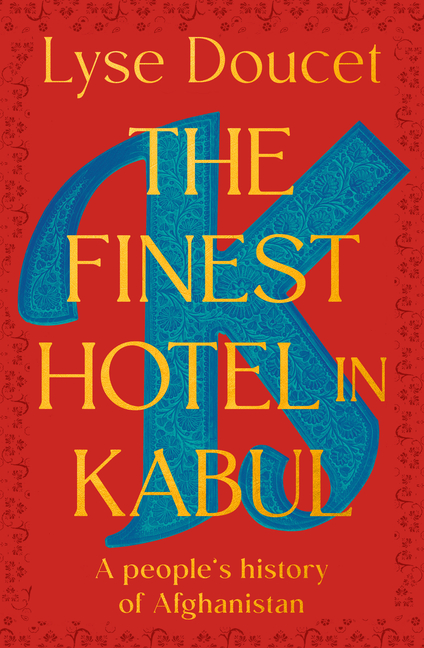
The story of a hotel. The story of a nation. When the Inter-Continental Kabul opened in 1969, Afghanistan’s first luxury hotel symbolised a dream of a modernising country connected to the world. More than fifty years on, the Inter-Continental is still standing. It has endured Soviet occupation, multiple coups, a grievous civil war, a US invasion and the rise, fall and rise of the Taliban. History lives within its scarred windows and walls.
An uneven but ultimately compelling attempt to provide a 'people’s history' of the country ... The pace here often feels slow, the detail about both the hotel and the author’s journalistic challenges excessive and the prose occasionally prone to what sounds like TV-speak ... [Doucet] also makes the distracting choice to refer to herself in the third person ... Doucet does have an eye for the black comedy of successive regimes assuming control of both country and hotel ... For a good chunk of the book, I questioned Doucet’s choice to tell the country’s story through this particular place ... But at some point, the book rises — or falls — into the more representative history Doucet aims for ... And a somewhat plodding, occasionally frothy book becomes both riveting and sad ... Doucet’s long focus pays off ... Deeply felt.
Ms. Doucet’s affection for the country is unmistakable. But her conceit that the Inter-Con’s trajectory can constitute, as the book’s subtitle asserts, 'a people’s history of Afghanistan,' is rickety at best. ... Ms. Doucet’s ambition to tell Afghanistan’s story is frustrated by her choice to make the hotel the book’s central character ... It doesn’t help that Ms. Doucet’s prose, replete with stock expressions, is tiresomely banal ... As I closed the book—the distillation of almost 40 years of its author’s engagement with Afghanistan and its pre-eminent players—I realized I had yet read another work that, rather than enhancing our understanding of Afghanistan, demonstrates why we continue to fail to understand it.
Charming and often surprising ... Doucet succeeds in making the hotel an oddly successful frame for a sweeping social history of Afghanistan over the last half century and a moving symbol of its remarkable ability to endure whatever horrors fate has thrown at it ... What sustains the book is Doucet’s focus on the ordinary Afghans who keep the place going ... In Doucet, and her witty, observant and sometimes heartbreaking book, they have found a worthy chronicler.