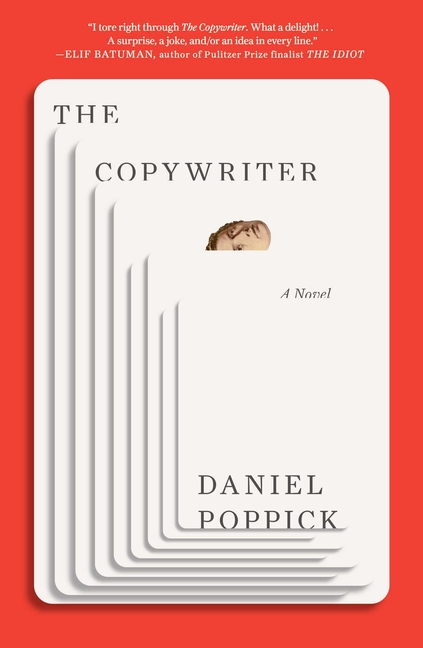
Some of the material in The Copywriter is banal ... Some of it is goofy ... Looming over the novel is a question: can this existence—this openhearted, roguish, aimless scavenging—yield anything of value, or is it just a waste? ... One of The Copywriter’s most moving aspects is its expansive definition of poetry ... The gentle, self-effacing tone of a novel whose sympathies lie with the minor and the easily overlooked ... Poppick’s point isn’t that everything matters; it’s that anything might.
Refreshingly understated ... Rather than build toward a dramatic conclusion, the events of the story occur much as they would in real life — that is, with little conventional narrative momentum. They just happen. This approach is mirrored in the novel’s structure: The Copywriter is formatted as a journal being kept by D__. That playful form is one of the novel’s delights.
The Copywriter is written as a series of notebook entries ... A chaotic repository of parables, dreams, and emails ... By meticulously documenting the 'uncanny, comically meaningless' nature of his tasks, D__ performs an act of de-naturalization; he refuses to see the office’s absurdity as normal ... Suggests that while the modern artist may be forced to lease their hours to the marketplace, the lease does not include the soul ... By reclaiming language from its day job and returning it to the realm of poetry, D__ does more than just survive; he stages a quiet, persistent revolution.