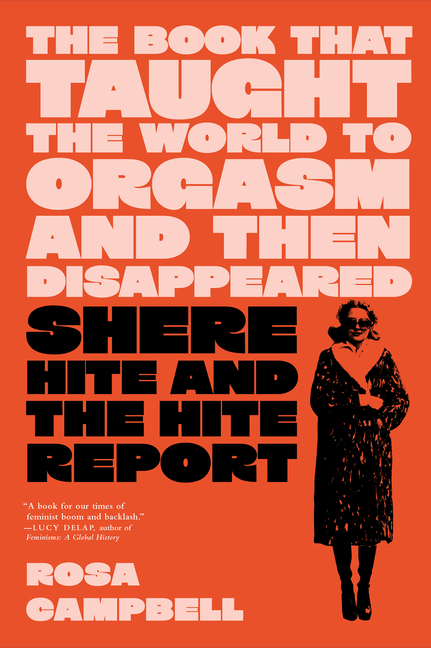
Campbell writes in her preface that, when she told friends she was working on Hite, they shrugged and said they had never heard of her. Without glossing over Hite’s shortcomings, both temperamental and methodological, Campbell’s compact book makes a persuasive case for why they should have.
Neither wholly accurate nor fair. Quite ironically, Campbell erases—'disappears'—the pioneering work of Hite’s feminist predecessors and contemporaries ... A feminist historian should have firmly situated Hite’s work as part of a larger movement and cultural wave, where it belongs. By omitting or downgrading the contributions of Hite’s predecessors, Campbell burnishes Hite’s importance, which has the ancillary consequence of achieving the same result for Campbell herself ... Campbell glamorizes herself, along with her subject ... There is something uncomfortable about this level of infatuation in a serious work of historical recovery. It goes beyond admiration for a subject into a kind of merger fantasy that makes it hard to trust Campbell’s critical judgment.