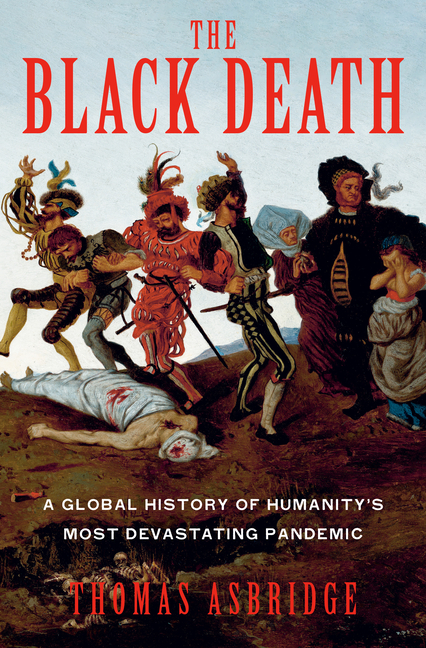
The Black Death was unquestionably one of history’s defining episodes, yet a critical feature of its progress has often been ignored: the disease was not confined to Europe, but rather affected almost all of the known world, including the Near and Middle East, Byzantium, north Africa and Asia. Tracing the pandemic’s course across the medieval globe, The Black Death contrasts the experiences of different peoples, including Christians, Muslims, and Jews, charting this catastrophe’s transformative effects on diverse aspects of medieval life.
A vivid and sweeping new history of the outbreak ... The results are mixed, betraying the stark limits of this approach and the need for a kind of history that fully integrates anguished medieval chronicles with modern molecular evidence.
Takes the reader on a vivid tour ... Asbridge evokes terror and pity by focusing in on what he calls 'micro-histories' of particular individuals caught up in the horror ... Asbridge has mined bureaucratic records to argue that some places were far more badly affected than it was previously thought.
Not only an ambitious task but also a brave one to attempt to write a history of the disease ... The Black Death: A global history mostly succeeds in doing so ... A commendable strength of the book is the sustained attention it gives to the Islamic world. Muslims’ experiences are as central in Asbridge’s story as those of Christians ... The result is a riotous panoply of medieval Christian, Muslim and, to a lesser extent, Jewish life ... An unrelenting sameness nevertheless flattens this rich variety of people and places into a rather dispiriting blur.