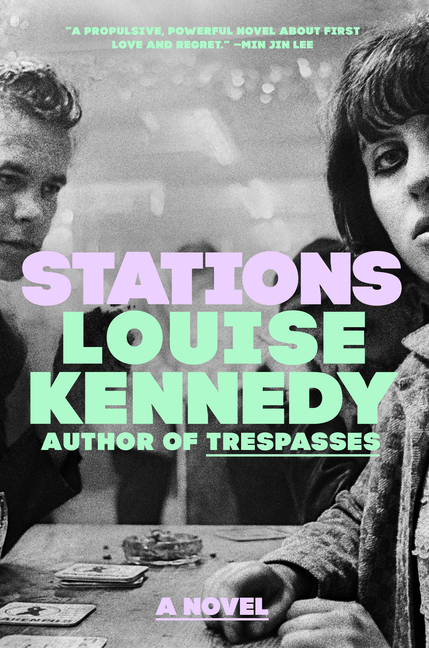
Extraordinary — and indeed bittersweet ... There’s a lived-in circumspection to Kennedy’s work ... ennedy has earned a spot alongside contemporary Irish greats such as Eimear McBride and Sally Rooney, authors whose next project I’ll race to read, whatever they choose to write about.
Kennedy constructs Stations as a series of crucifying moments, clearly dated, over a quarter century. Those silent gaps — some just a few days, one as long as 18 years — can roar with longing or pain, confirming our fears for these young folks or giving us a moment of relief ... Her prose style, though, is what really roots us to this story. It’s a seamless mix of narration and internal reflection. And the dialogue — without quotation marks — captures the erratic structure of real conversation, that haphazard tower of Jenga blocks we keep shifting to be heard ... Desire and melancholy pull so fiercely on opposite sides of this book that it’s hard to close it. At times the story is punctuated by extravagant grief. When Red 'wept noiselessly into her hair until dawn,' I had to put the book down and take a few big breaths ... Late in Stations, Róisín texts a friend about a novel that depicts the sorrows of Irish emigration to England: 'This book. I’m fkn destroyed.' Exactly.
Blisteringly good ... Kennedy...evokes the 1980s city with almost hallucinogenic precision, but her greater power lies in her remarkable humanity. Her characters are messy, flawed, often shatteringly self-destructive but, mapped with her fierce compassion, they march straight off the page ... A love story, a furious, tender, potty-mouthed paean to loyalty and generosity of spirit. It is also an elegy to a generation of lost Irish boys, a heartbreaking testament to the violence and fear passed down from father to son ... Kennedy’s novel is too subtle and clear-eyed to offer easy answers, but her questions will burn themselves into your heart.