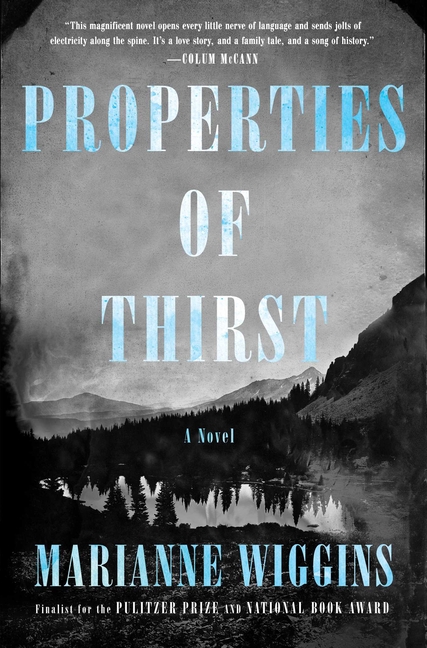
The story of a changing American landscape and an examination of one of the darkest periods in this country's past, told through the stories of the individual loves and losses that weave together to form the fabric of our shared history.
[Wiggins'] characters are given to the lively, comic backtalk of the golden-age Hollywood movies often filmed nearby. Tonally, this is tricky to reconcile with the running of a concentration camp ... Ms. Wiggins stresses that her characters are all honorable people doing their best in a bad situation, even working together to provide seed money and business opportunities for the dispossessed prisoners. The vigor and sweep of her writing has real rhetorical potency. I still don’t think this is a fit subject for Greatest Generation heroics but Properties of Thirst comes as close as anything will to persuading me.
... [a] legitimately great American novel ... This is a big, bold book, generous of spirit and packed with prose that gleefully breaks the rules ... Wiggins’ gifts are many, but most important here is her knack for weaving the personal into larger historical currents, in this case domestic concerns during World War II ... has many modes, ranging from tragedy to screwball comedy ... a seamless, inspired whole ... Wiggins’ writing glides off the page in an onslaught of stylistic flourishes writers are often told not to use: italics, consecutive colons, ellipses, em dashes, paragraphs that go on for pages at a time. But there’s nothing terribly showy about Properties of Thirst. It speaks to the heart as well as the head and conjures characters to whom you won’t want to say goodbye.
Expansive, thoroughly engaging ... A story of family, responsibility, and the tug of heritage, it applauds decency and determination while weighing the roles of individuals in collective wrongs ... Wiggins’ writing is observant, thoughtful, and willing to wrestle. It’s also a joy. Packed with parentheticals and humming with homonyms, it glides – seamlessly, for the most part – between the book’s present and its characters’ many pasts.