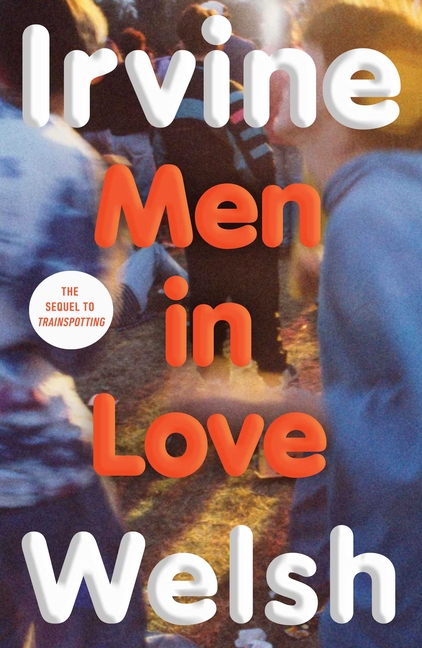
The sequel to Welsh’s 1993 novel Trainspotting follows the old friends Renton, Sick Boy, Spud, and Begbie as they try to trade heroin for something new: love.
If this sounds like an updated Victorian melodrama, that’s because...it is at some level ... The difference here is the reductive perspective Welsh applies to all sides. His caricaturing can be very funny, shrewdly nailing the precise cultural, material and libidinal interests operating at any given moment, but it’s hard to care very much about which of his equally unlovable parties is going to end up in command of Cantley Lodge ... Trainspotting articulated the energies of an entire culture seething under the Thatcherite ice of 1980s Britain. Men in Love doesn’t aim so high.
At more than 500 pages, Men in Love would have benefited from a more ruthless edit. Certain episodes are overlong and overdone, stuffed with one scabrous exploit after another. Yet an undeniable energy infuses each riotous episode, as does the rough-edged, expletive-heavy, working-class Scots vernacular. During its finer, sharper stretches, this is a caustic caper filled with wit and grit.
There are plenty of moments that showcase Welsh at his best, impertinent and loose and attuned to the poetic cadence of everyday speech. When his writing hits these heights, most often during flights of knowing, referential, rhetorical fancy, it is hard not to be charmed by its flair and insolence ... Elsewhere, Men in Love is tough going. Throughout, there is a tendency to grope for edgy and transgressive sentiment in a way that lands closer to juvenile and embarrassing ... Clocking in at well over 500 pages, there is also the sense that Men in Love could have done with a more rigorous edit.