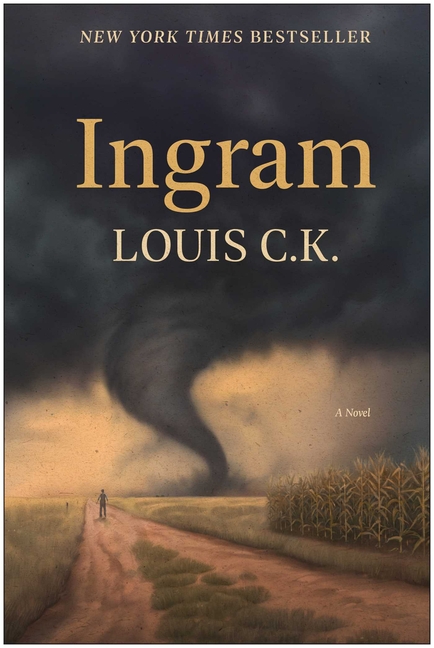
When Ingram is forced by overwhelming poverty and spiritual exhaustion to walk away from his home, he leaves behind a neglectful childhood on a dirt farm on a dead-end road. With no family, no resources, and no practical understanding of the world, Ingram's only compass is the daily fight to survive and the narrow dream of one day owning a truck. A picaresque novel set against the backdrop of working-class Texas, Ingram invites readers to see the world through the eyes of a child who drifts through a tough American landscape of corn farms and oil fields, guided by diner waitresses, migrant workers, and criminals, trying to make sense of a world that doesn't care about him anymore than a jungle or desert does for the creatures that toil to survive within them.
Driven by concept rather than character, and C.K. aspires only to concoct a narrator as naive and transparent as possible without worrying too much about how he got that way ... Might have taken on the archetypal aspect of a fairy tale, in which characters’ motivations and inner lives are externalized or simply unexplained. But C.K. has instead adopted the tone and style of realist fiction, which leads readers to expect a novel’s fictional world to abide by the rules of the one we live in ... Inauthentic ... What ought to have been cashiered as mere juvenilia winds up printed between hardcovers.
One might wonder why C.K. didn’t set out to write a comic novel, why he gave us something so bleak. And yet bleakness is the quality I associate most with his work ... In any case, Ingram is hilarious, regardless of C.K.’s intentions. Even the summary on the back cover reads like a bad movie tagline from30 Rock.
Relentlessly belabored and unclear ... The dull prose never gets better through Ingram’s 288 pages, and there’s no compelling narrative ... But this sort of nuance is not something C. K. is interested in exploring in Ingram. Its pages are full of stock, one-dimensional characters ... The mundane contempt that C. K. seems to hold for his characters and readers alike is the book’s defining feature.