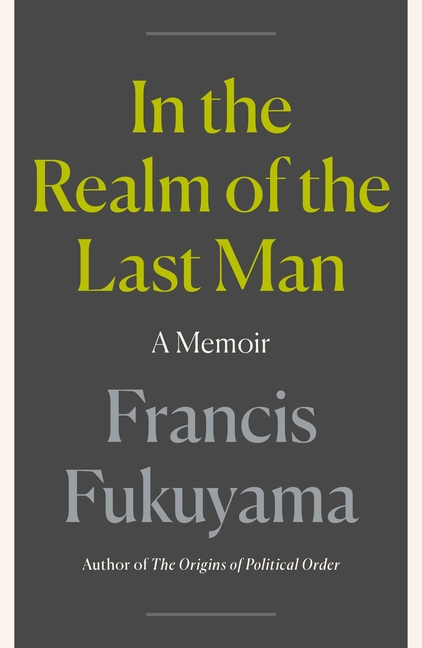
Francis Fukuyama, a leading public intellectual, is well-known for his landmark, bestselling works of political philosophy and history. Here, for the first time, he charts his political and intellectual evolution across five transformative decades.
Fukuyama now seeks to set the record straight ... This fresh attempt to clarify his position is styled by Mr. Fukuyama as a memoir, but it is better seen as a series of meditations ... The book’s style is more professorial than memoirist.
Purely as a memoir, I should say, this one is disappointing. Fukuyama loses interest in telling his own life story around page 60. The fun and revealing anecdotes are front-loaded ... Fukuyama wants to be able to say I told you so. And on these grounds, his book does remind us that he did. But there is little comfort in this. What he has identified is a human problem: the blink of an eye that separates utopia from dystopia. We got what we always wanted, but it is not enough and never will be.
The most dramatic passages of his memoir describe Fukuyama’s break with his neoconservative milieu over the war in Iraq ... Less...a personal memoir than as an inner monologue of post-cold war liberalism ... The memoir is not the apologia of a prophet whose prophecy failed. It is the record of a moment when liberalism learnt to live in the present tense.