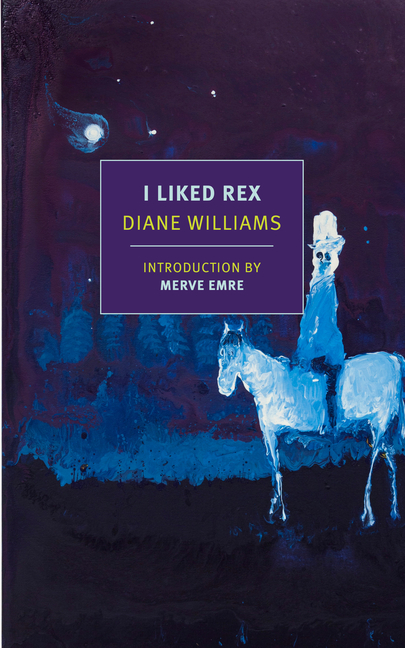
Reading the short glimpses into the lives of various characters created by Diane Williams feels a little like reading through a collection of haiku. The reader may sigh in recognition after taking in a squib. Or they may move on to the next entry, hoping it will be wiser or funnier. Or the reader may put I Liked Rex down and stare off into space, puzzled or amused. Or hungry ... Williams has no interest in plot as the term is generally understood and no interest in character development. She’s sometimes great at individual sentences, though ... The blurb supplied by New York Review of Books for I Liked Rex contends that 'much of Williams’s genius lies….in what is left unspoken.' There’s certainly much to find in that category. Some of what IS spoken pops out at the reader in a way that’s kind of fun.
Throughout these stories—most no longer than two or three pages, with paragraphs of one or two sentences—Williams appears to dismantle fiction-making itself ... while there is a sharp beauty to Williams’ stories, and to what Merve Emre refers to, in the introduction, as 'her uncommonly disciplined syntax,' there’s little to distinguish these stories from one another. Of course, that’s part of Williams’ point—but once made, that point rather quickly loses its sheen. Williams’ work inadvertently reinforces the appeal of the very conventions she’s been deconstructing. Read just a few of these stories and you might be left breathless. Keep reading and you might find yourself longing for something—anything—to happen. Consumed one after another, these stories start to seem like too much of a good thing.
Delightful characters, curious images, and love affairs gone awry animate this minimalist metafictional collection ... These deceptively simple stories eschew linear plots to home in on arresting images and phrases that reveal their characters’ complex and resonant inner lives: 'The loss of paradise keeps happening,' reflects a recent divorcé. This is one to savor.