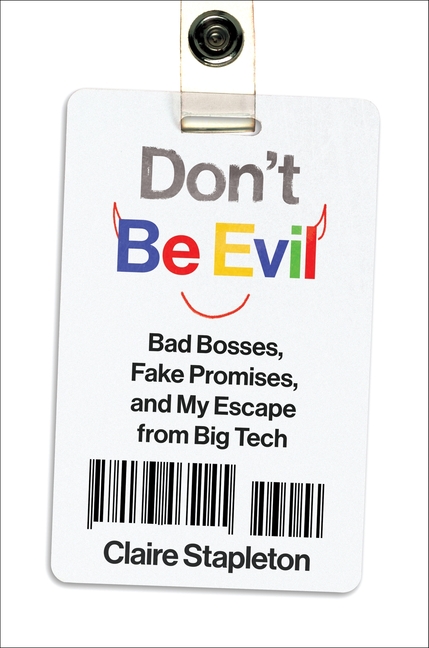
Don’t Be Evil is an insider’s account of how power actually works—and a reckoning with the stories we tell about work, purpose, and ourselves. In a culture that collapses identity into work, and as tech elites blur the line between private authority and public life, it asks: how much can you change from within—and when is it time to walk away?
A tech memoir presented as a story of metamorphosis ... Her story, though familiar, has the potential to be powerful ... In her conclusion, all she leaves us with, in the form of advice, is a watered-down riff on the company’s own motto: 'Try not to be evil.' Surely the original Bard of Google should be able to spin a better rallying cry than that.
If you have ever worked at a dysfunctional office, Don’t Be Evil will likely make your cortisol levels spike ... Along the way, Stapleton makes a miscalculation common to the workplace tell-all genre: dwelling on her childhood ... Anxiety courses through her pages, as if she’s bracing to get smacked by some authority figure ... To read Don’t Be Evil is to remember that you too can rid yourself of the malignance.
What starts as a straightforward memoir eventually evolves into a reckoning ... Smart, fun, and enjoyable ... This isn’t a juicy tell-all, but an intelligent memoir about a woman growing up in Silicon Valley.