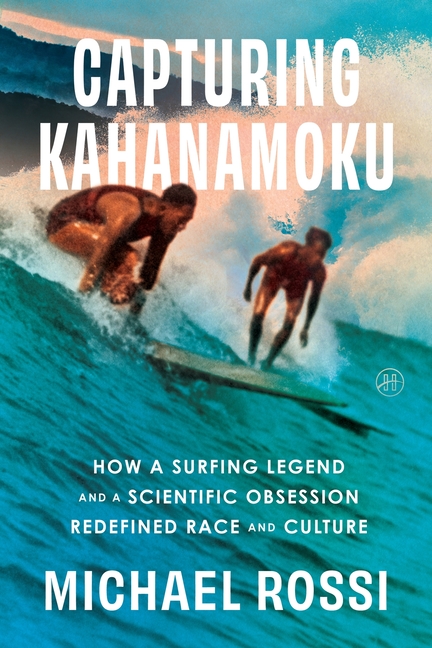
An engaging romp ... Rather than flattening his subjects, Rossi weaves together everything from Jack London’s fiction to plaster-casting best practices to Osborn’s daddy issues. Though at times protracted, these tangents are worth the ink ... The upbeat final chapter of Capturing Kahanamoku doesn’t fully persuade. Though Shapiro did become a vocal opponent of scientific racism, his role in the rise of cultural anthropology seems overstated. And unveiling Kahanamoku’s cultural legacy as some sort of surprise ending comes off as trite ... It appears Rossi fell for the marketing hype ... Still, Capturing Kahanamoku could be a valuable tool for navigating that future — as long as you aren’t lulled into believing the underlying prejudices of its story are just rogue waves in the distance.
Rossi takes a nuanced, personal approach to the historical characters featured in his book ... Vivid ... Rossi gives a largely accessible account of the development of eugenics ... Rossi also notes a range of early opponents to eugenics, making a compelling case that racist ideas and policies should not be excused as mere products of their time.
Well researched, engrossing, at times out of touch, and entirely oddball in its approach ... Leading eugenicists of the time harbored an unhealthy, paternalistic obsession with Polynesian people and their cultures, and Rossi is dutiful in sharing evidence for this ... [Rossi's] argument stands somewhat unsteadily upright—it is mostly sound in the broad strokes but wobbles a bit when subjected to scrutiny ... Rossi’s practiced, expository style unearths the roots of eugenics in the United States, and while this history was morbidly interesting ... Build[s] up a narrative momentum that helped carry me through the drier chapters consisting of correspondence between the country’s foremost eugenicists ... The cast of David Kahanamoku is the critical moment that gives the book its title...While interesting, I found this moment a little 'enervating' myself, a little shrug-worthy, and perhaps a bit underwhelming ... I wished for something more substantial, and ultimately, Rossi’s dual narratives felt a bit isolated from one another.