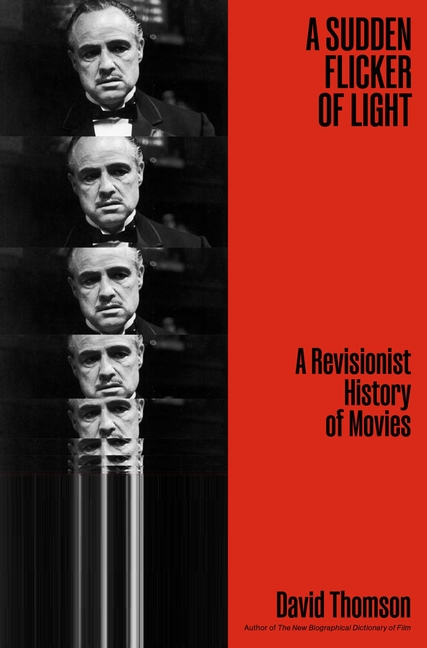
While the movies have declined, Thomson argues that so too has life 'become a movie.' We are so enclosed by screens that we struggle to think beyond them ... He looks back with remorse on 'a career of saying this film, not that one,' turning a rueful eye on his own life’s work ... But revisionism from the standpoint of pessimism risks nihilism. Thomson is in danger of denying, not least in himself, the very possibility of a critical spectator ... As the bad news builds, Thomson stays light on his feet, springing back and forth through time, a fragmented structure to mirror the experience of short-form video in the attention economy.
A book-length renunciation of his career would be quite the ave, but Thomson can’t commit to that. He pleads his case like a brilliant drunk representing himself at night court ... You don’t read Thomson for sympathy, or necessarily for consecutive thoughts. Let him brood. I feel almost cheap pointing out that he’s still plenty fond of cinema, and that the revisionism promised in his subtitle is often MIA ... Works best when Thomson’s running on autopilot and forgets that the movies confound him now ... For good reason, he’s been writing progressively more pessimistic versions of the same book; it’s a long walk out of the movie palace. In his next history (and I do hope there’s another), he may finally set fire to the place.
I can’t recall such a bleak appraisal of an art form since Tipper Gore went after Twisted Sister in the 1980s ... Thomson’s book, coming late in his career, is more successful as a provocation than as a persuasive indictment of cinema ... Thomson sprinkles critique throughout his book like seasoning unevenly applied to a gamey piece of meat. He concedes that his argument jumps around confusingly, and he writes with an obscure style that makes his precise views difficult to pin down ... Movies aren’t bad for us. Some days I think they keep my heart from slowing to a stop. It will take a great deal more than this sour book to convince me otherwise.